




President Ilham Aliyev has approved amendments made to legislation related to labour relations. In total, more than 400 amendments have been made to the Labour Code and several other laws.
These amendments aim to improve labour legislation in line with the Conventions of the International Labour Organization and international practice, ensure more reliable protection mechanisms for workers’ rights, apply flexible and socially oriented legal regulations in labour relations, and introduce new concepts in line with modern requirements.
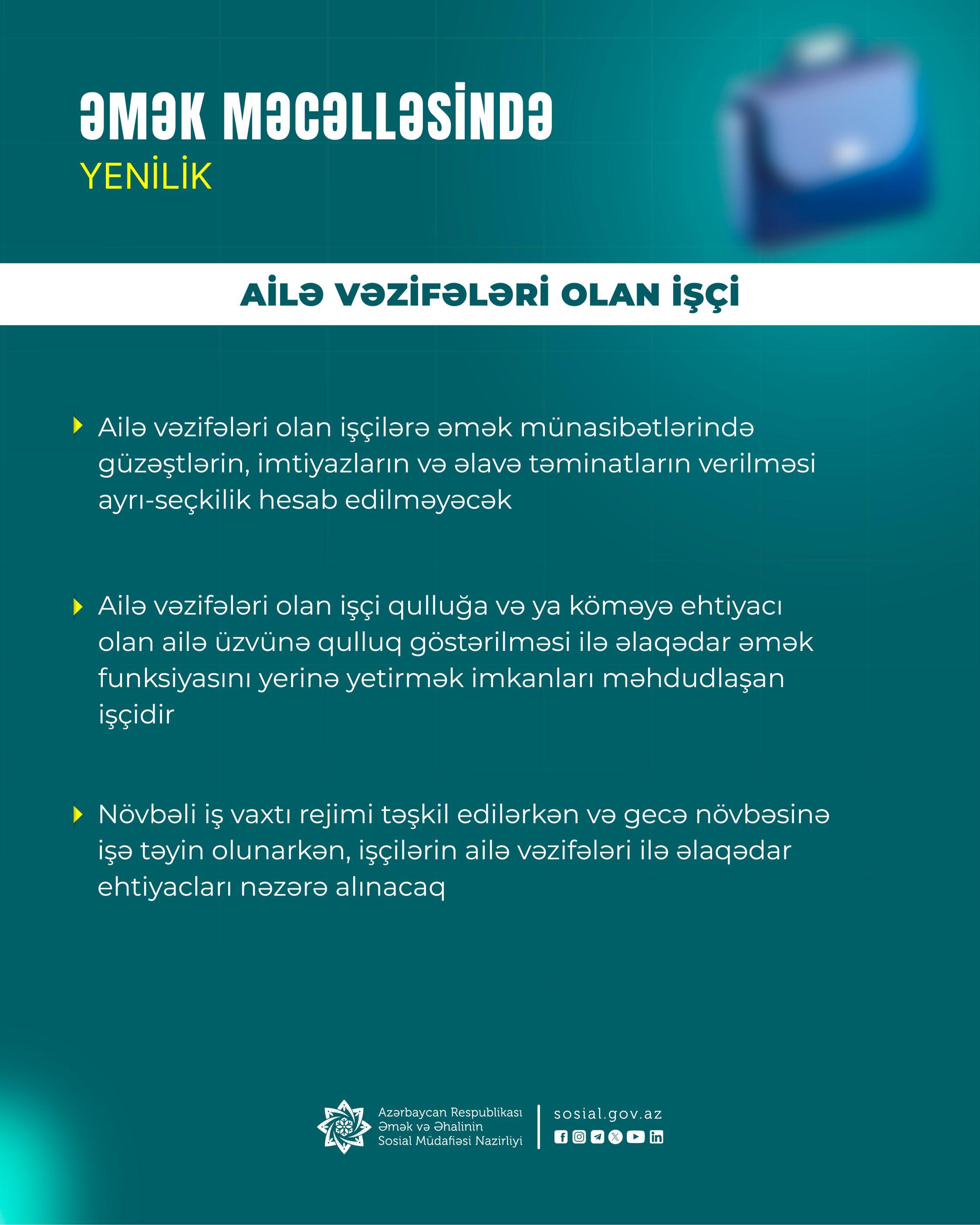
The concept of “Employee with family responsibilities” has been included among the definitions in the Labour Code. This concept refers to an employee whose ability to start or perform labour activity is limited due to providing care or assistance to a family member in need of care or help.
Granting concessions, privileges, and additional guarantees to employees with family responsibilities in labour relations will not be considered discrimination. When organizing shift work schedules and assigning night shifts, employees’ special needs, including those related to fulfilling family responsibilities, will also be taken into account.
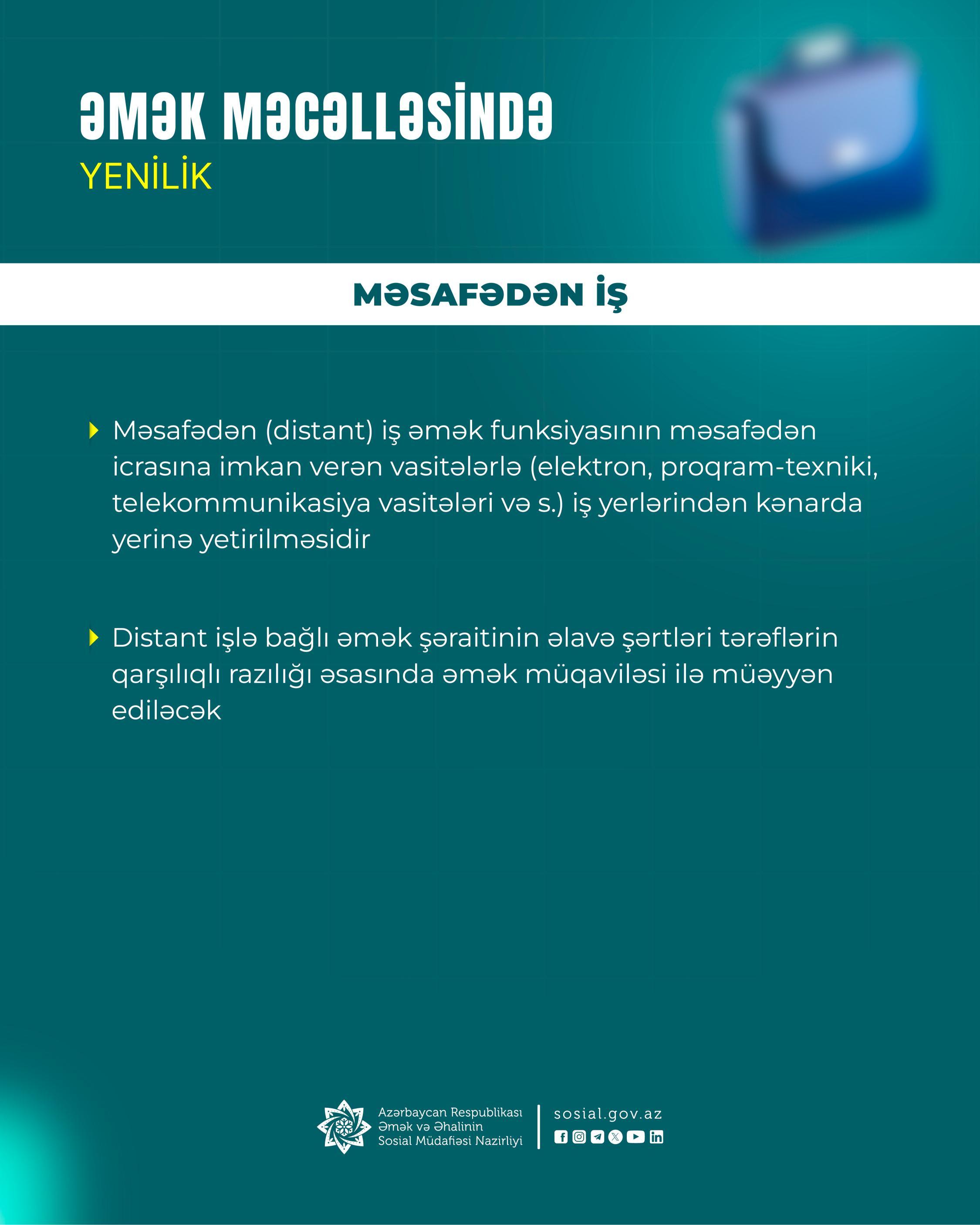
One of the new amendments serves to create a legal basis for employees to perform their labour functions remotely using electronic, software-technical, and other means. For this purpose, the concept of “Remote (distant) work” has been introduced into the Code. Additional terms of labour conditions related to remote work will be determined by the labour contract based on mutual agreement of the parties.
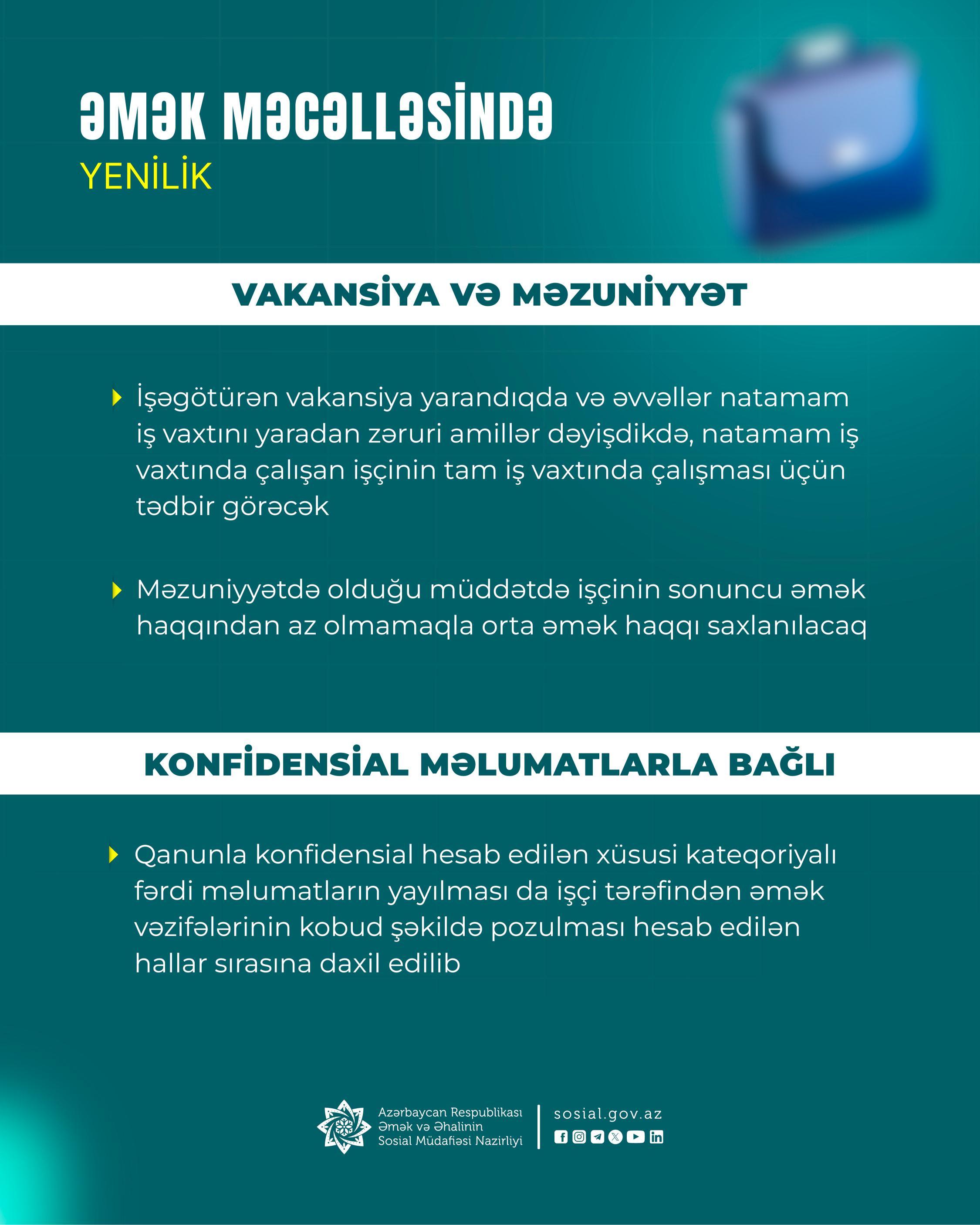
In the legislation, the term “termination of a labour contract” has been replaced with “cessation of a labour contract.” The legal basis for the establishment of the Tripartite Commission on Labour and Social Issues has been strengthened. Relevant regulation has also been introduced in the Code to ensure that an employee’s average wage during leave is maintained at no less than their last wage.
The new amendments also include:
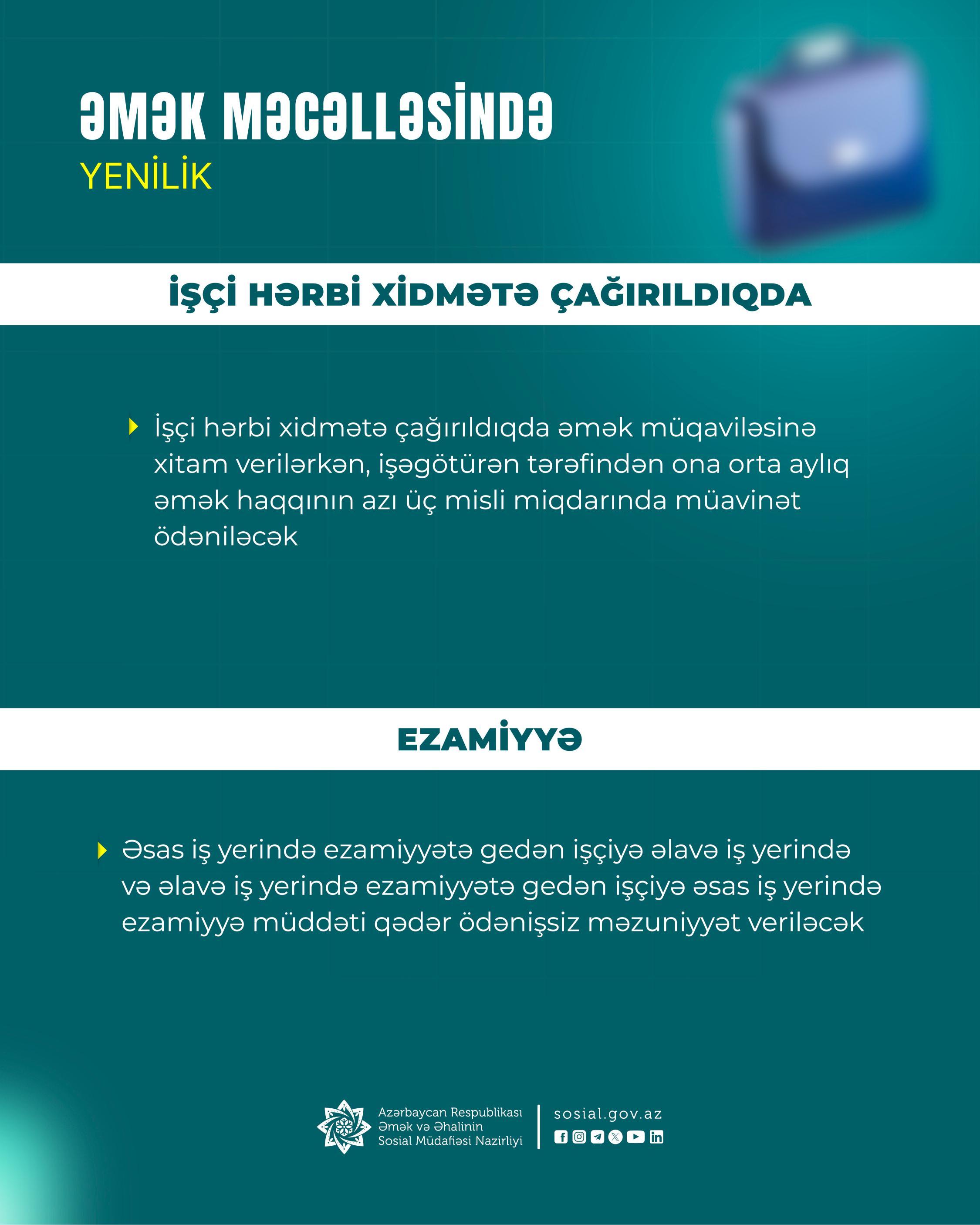
- Payment of a benefit by the employer in an amount not less than three times the employee’s average monthly wage upon termination of the labour contract when the employee is called up for military service,
- Inclusion among employees entitled to at least 46 calendar days of annual leave of those who became disabled due to defending the territorial integrity, independence, and constitutional order of the country, the events of January 20, fulfillment of military service duties, or service at the Chernobyl Nuclear Power Plant, as well as employees awarded the title of “War Veteran” for participation in combat operations for the territorial integrity of the Republic of Azerbaijan, employees who served as military personnel in countries where combat operations were conducted, and employees awarded the highest state honors of the Republic of Azerbaijan,
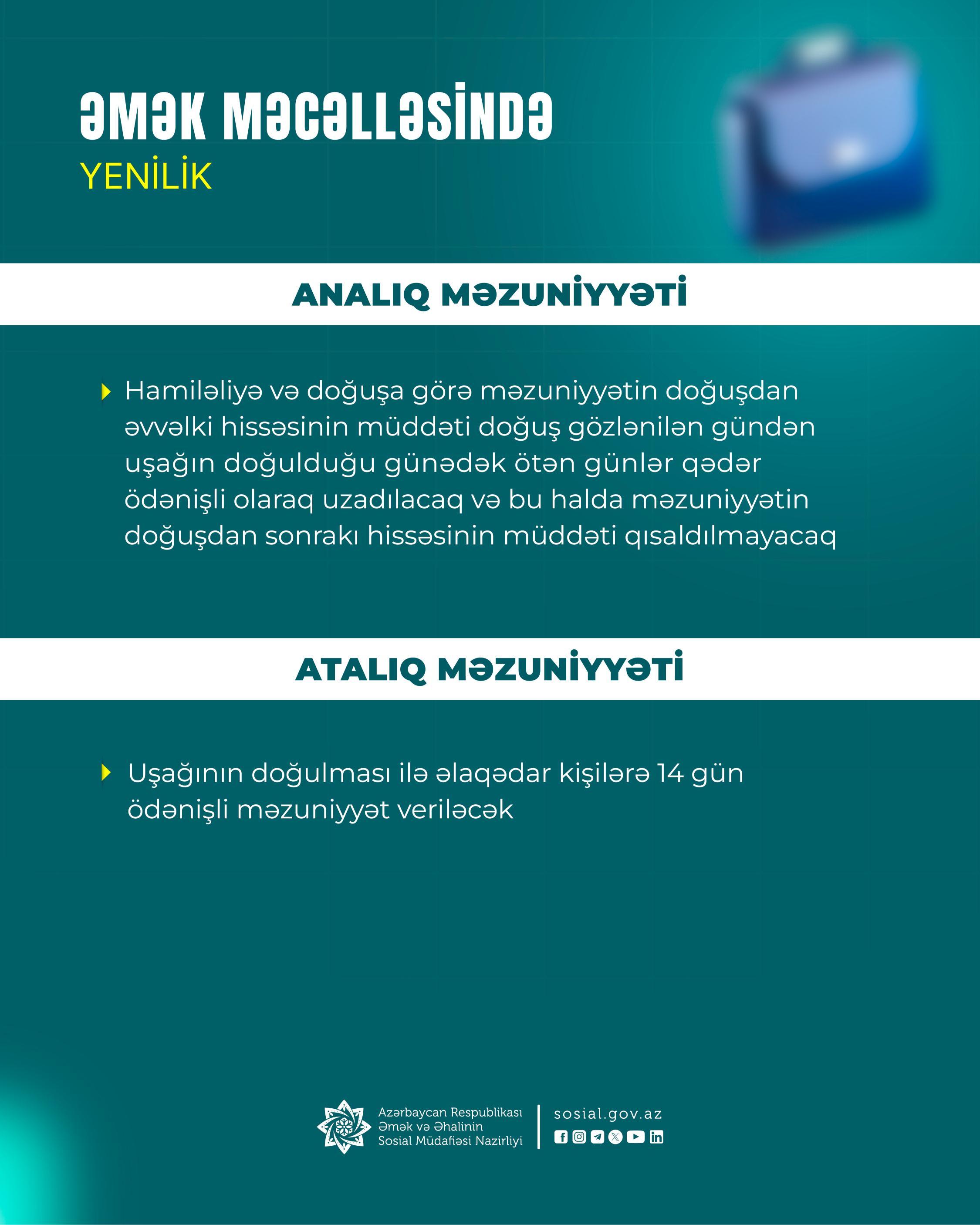
- Extension of the prenatal part of maternity leave by the number of days from the expected date of birth to the actual date of birth, with payment, without shortening the postnatal part of the leave,
- Granting men 14 calendar days of paid leave in connection with the birth of their child,
- Termination of the labour contract with an employee who is unable to perform their labour function due to continuous loss of work capacity for more than six months, if adapting the workplace or transferring the employee to lighter work in accordance with an individual rehabilitation program is not possible,
- Granting unpaid leave for the duration of a business trip at the additional workplace to an employee sent on a business trip at their main workplace, as well as granting unpaid leave for the duration of a business trip at the main workplace to an employee sent on a business trip at their additional workplace,
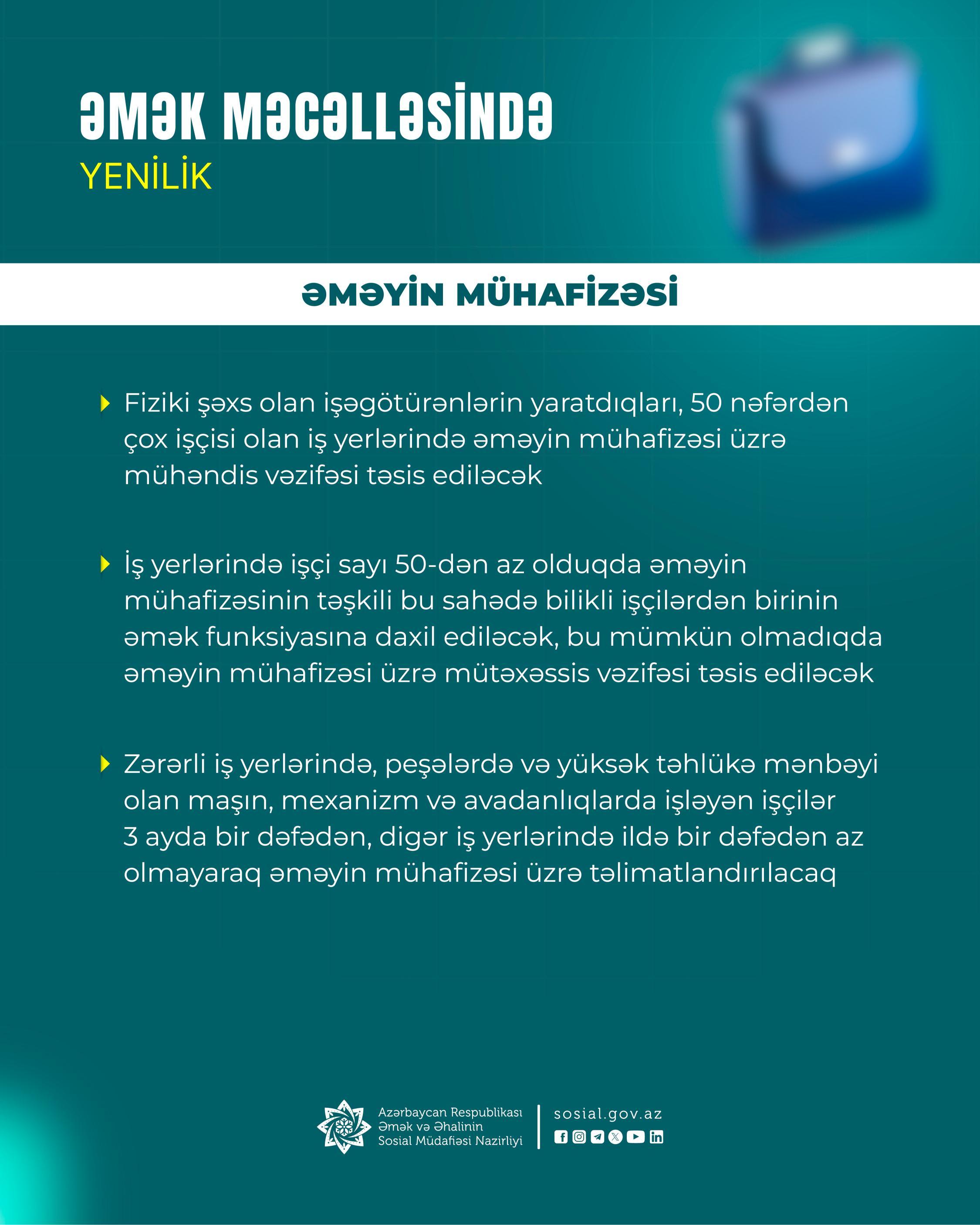
- Inclusion of occupational safety responsibilities in the labour function of one of the employees knowledgeable in occupational safety at workplaces with fewer than 50 employees, and if this is not possible, establishment of an occupational safety specialist position,
- Establishment of an occupational safety engineer position at workplaces created by individual employers where the number of employees exceeds 50,
- Obligation of the employer to take measures to enable an employee working part-time to work full-time when a vacancy arises or when the factors necessitating part-time work change,
- Mandatory occupational safety instruction at least once every 3 months for employees working in hazardous workplaces, professions, and with machinery, mechanisms, and equipment posing high risk, and at least once a year at other workplaces, etc.