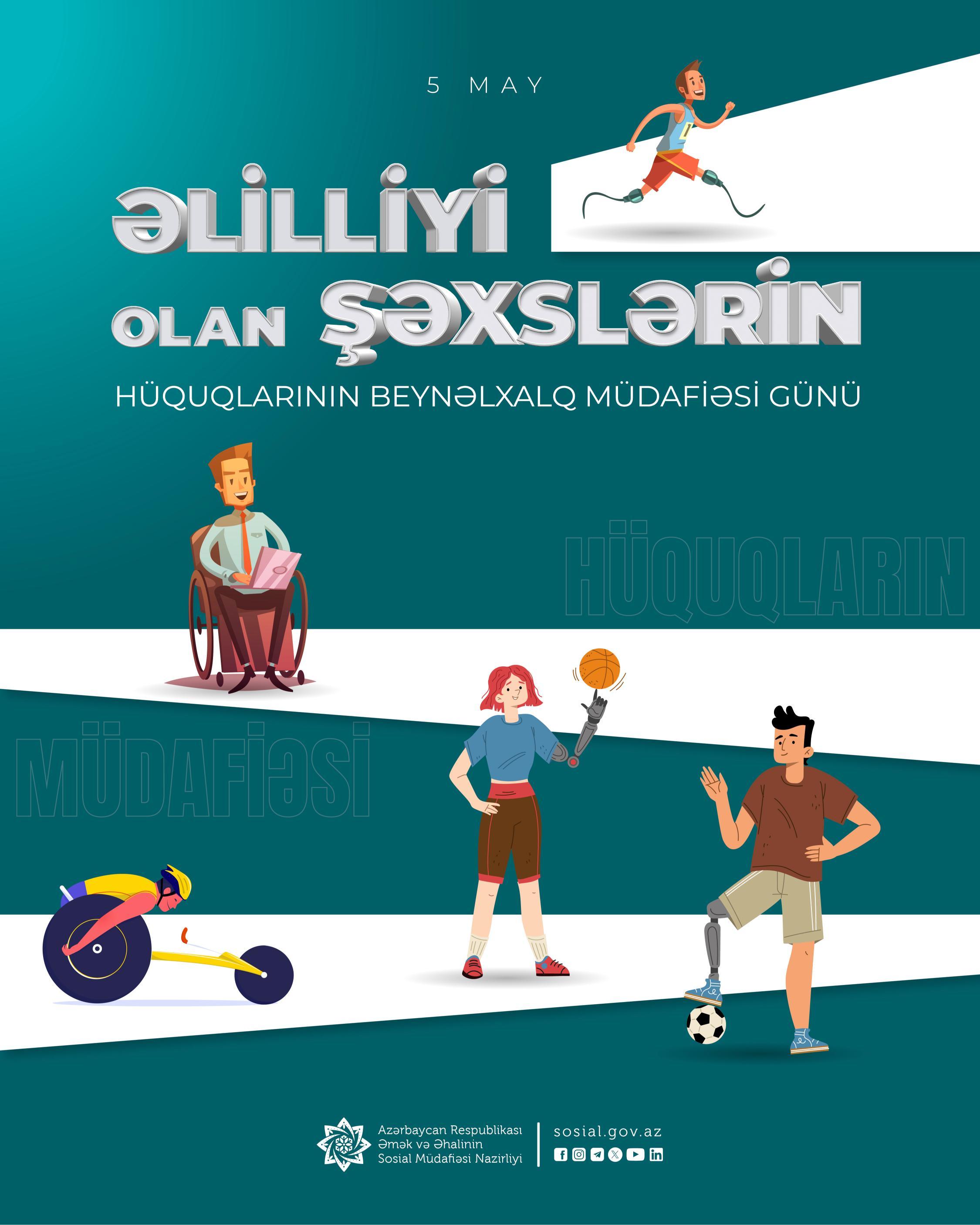





5 May – International Day for the Protection of the Rights of Persons with Disabilities
According to a resolution adopted by the United Nations General Assembly in 1992, 5 May is observed annually as the International Day for the Protection of the Rights of Persons with Disabilities.
In Azerbaijan, persons with disabilities are covered by the social protection and rehabilitation system. Based on the instructions of President Ilham Aliyev, since 2018 five social reform packages covering 4 million people have been implemented, with an additional annual financial volume of nearly 8 billion manats. These reforms have enabled a 3.1-fold increase in the minimum wage, a 2.9-fold increase in the minimum pension, a 2.9-fold increase in the average monthly pension, and a fivefold increase in social benefits and stipends. Within this framework, social payments directed to persons with disabilities have also significantly increased.
Citizens in this category are provided with monthly disability pensions or social allowances by the Ministry of Labour and Social Protection of the Population. Persons with disabilities related to war, military service duties, and other special reasons, as well as those with severe disability (81–100 percent impairment, Group I), are provided not only with pensions or social allowances but also with a Presidential monthly stipend. Caregivers of persons with Group I disabilities and children with disabilities are also entitled to this stipend.
Special attention is given to the development of the creative potential of persons with disabilities. The DOST Inclusive Development and Creativity Centre, established at the initiative of First Vice-President Mehriban Aliyeva, plays an important role in this field. Since its opening in 2021, along with its branches later established in Ismayilli and Barda, training in various creative fields has been organised for nearly 1000 beneficiaries. Their skills have been developed, and they have been provided with social-pedagogical and psychological support services.
During the past period, more than 16 thousand apartments have been provided to families of martyrs and persons with war-related disabilities, and 7.7 thousand cars have been granted to persons with war-related disabilities.
As one of the important social projects of the Heydar Aliyev Foundation, Regional Information Centres established in Nakhchivan, Ganja, and Yevlakh also contribute to expanding access to information and knowledge for persons with visual impairments through ICT.
In recent years, a modern rehabilitation system has been established in Azerbaijan, and new rehabilitation centres have been opened. Rehabilitation services provided to persons with disabilities now include robotic rehabilitation, socio-psychological rehabilitation, yoga, dance therapy, hippotherapy, and more. Since 2018, the annual number of persons with disabilities receiving services in rehabilitation centres has increased up to 12 times, reaching 142 thousand, while the annual number of rehabilitation aids provided at the expense of the state budget has increased sixfold, reaching 212 thousand last year.
At the same time, following the Patriotic War, more than 500 servicemen have been provided with 622 high-tech prostheses by the Ministry. Continuous efforts are also being made to support access of persons with disabilities to the labour market. In the past year alone, nearly 6 thousand persons with disabilities were employed, 1300 individuals established small family businesses under the self-employment programme, and 500 persons were involved in vocational training courses to acquire new professions.
The Vocational Rehabilitation Centre for Persons with Disabilities under the Ministry plays an important role in the social rehabilitation and professional training of young persons with disabilities. They acquire professional skills in more than 10 fields through 3–6 month courses. Those who successfully complete the courses receive certificates and are supported in entering the labour market. Participants are also provided with dormitory accommodation, meals, and social-psychological and medical-social services at the expense of the state.