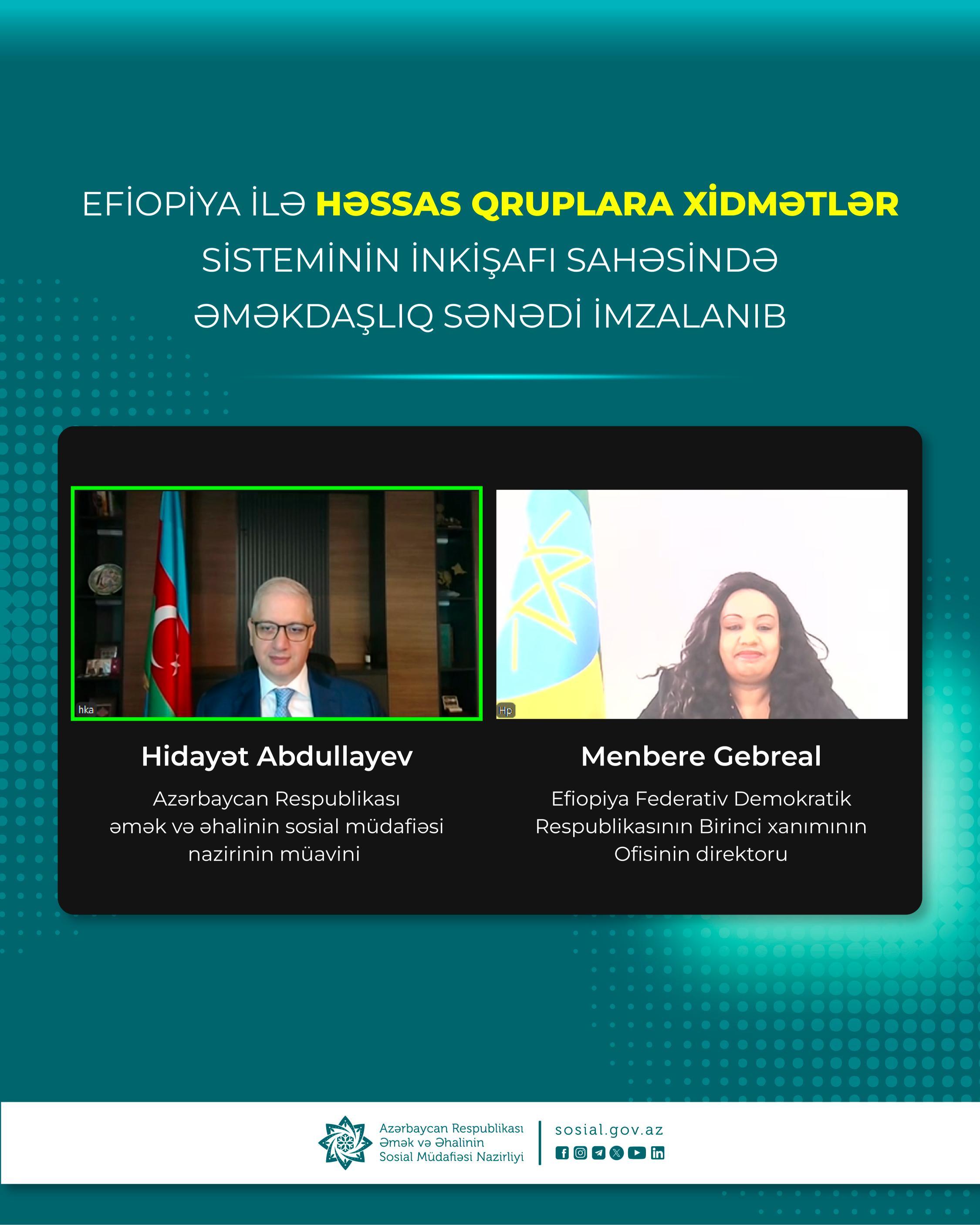





A Memorandum of Understanding on cooperation in the development of service systems for socially vulnerable groups was signed between the DOST Inclusive Development and Creativity Centre under the Ministry of Labour and Social Protection of Population and the Office of the First Lady of the Federal Democratic Republic of Ethiopia.
During the online signing ceremony, Deputy Minister Hidayat Abdullayev highlighted the growing relations between Azerbaijan and Ethiopia and stressed the importance of extending cooperation to the social sphere.
He noted the significant role of the DOST Inclusive Development and Creativity Centre, inaugurated in October 2021 with the participation of President Ilham Aliyev, First Lady Mehriban Aliyeva and Leyla Aliyeva, in promoting an inclusive society. Information was provided about the Centre’s activities and its efforts to develop the creative potential of persons with disabilities, children deprived of parental care, family members of martyrs and other vulnerable groups.
It was also noted that the Centre has showcased examples of inclusive creativity at major international events, including COP29, WUF13 and other prestigious gatherings abroad. Azerbaijan’s experience in inclusive development and creativity is ready to be shared with Ethiopian partners, and the new Memorandum represents an important step in this direction.
Ms Menbere Gebreal, Director of the Office of the First Lady of Ethiopia, expressed satisfaction with efforts to strengthen bilateral relations and provided information about initiatives implemented for vulnerable groups. She emphasised the significance of the meeting for expanding cooperation.
The Memorandum was subsequently signed by Hidayat Abdullayev and Ms Menbere Gebreal.
The document outlines cooperation in areas including the development of services aimed at identifying and enhancing the creative potential of vulnerable groups, designing and implementing programmes to integrate children with special care needs into mainstream education, preparing training and professional development programmes for teachers and specialists working with these groups, and developing legislative initiatives to improve conditions for vulnerable populations.