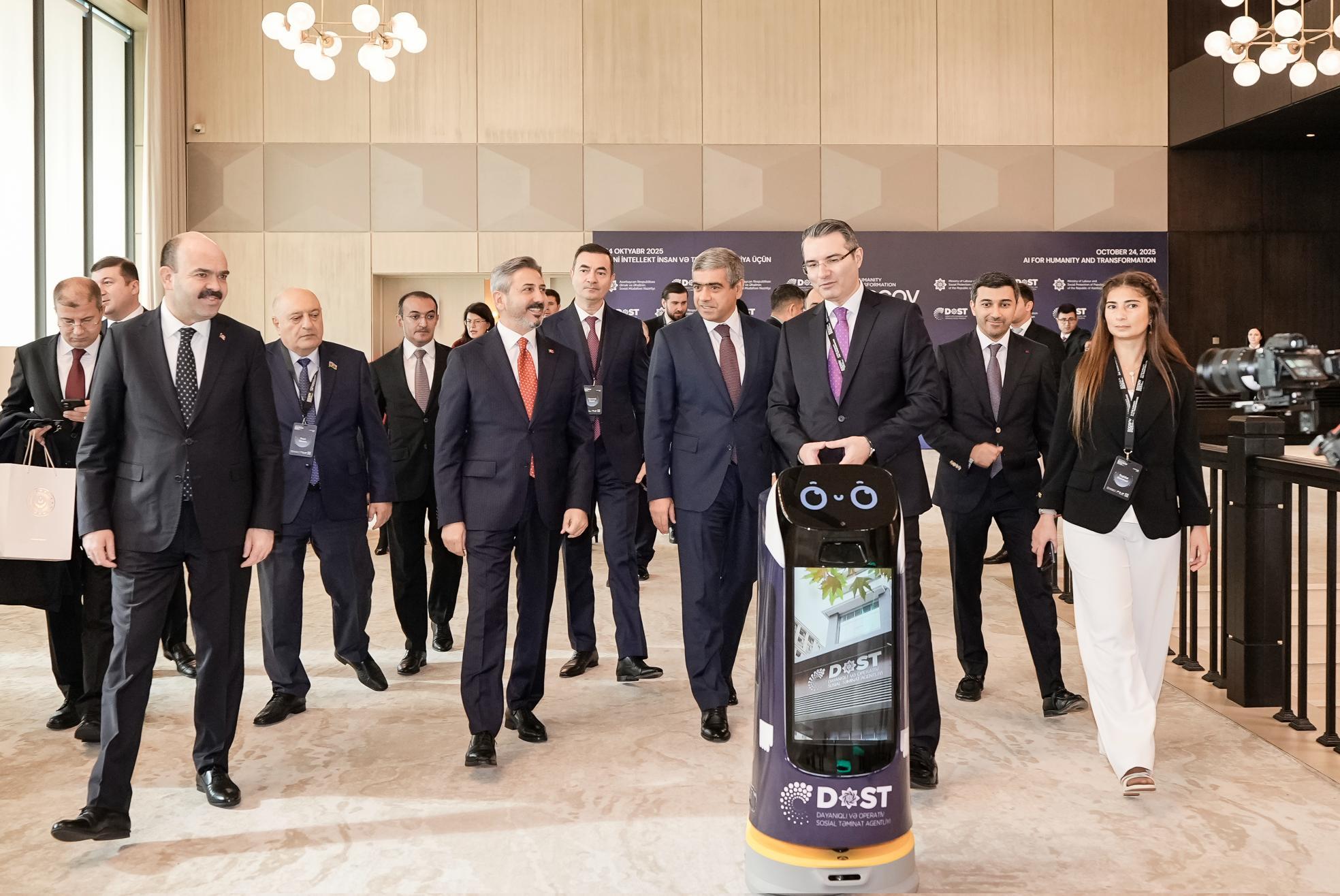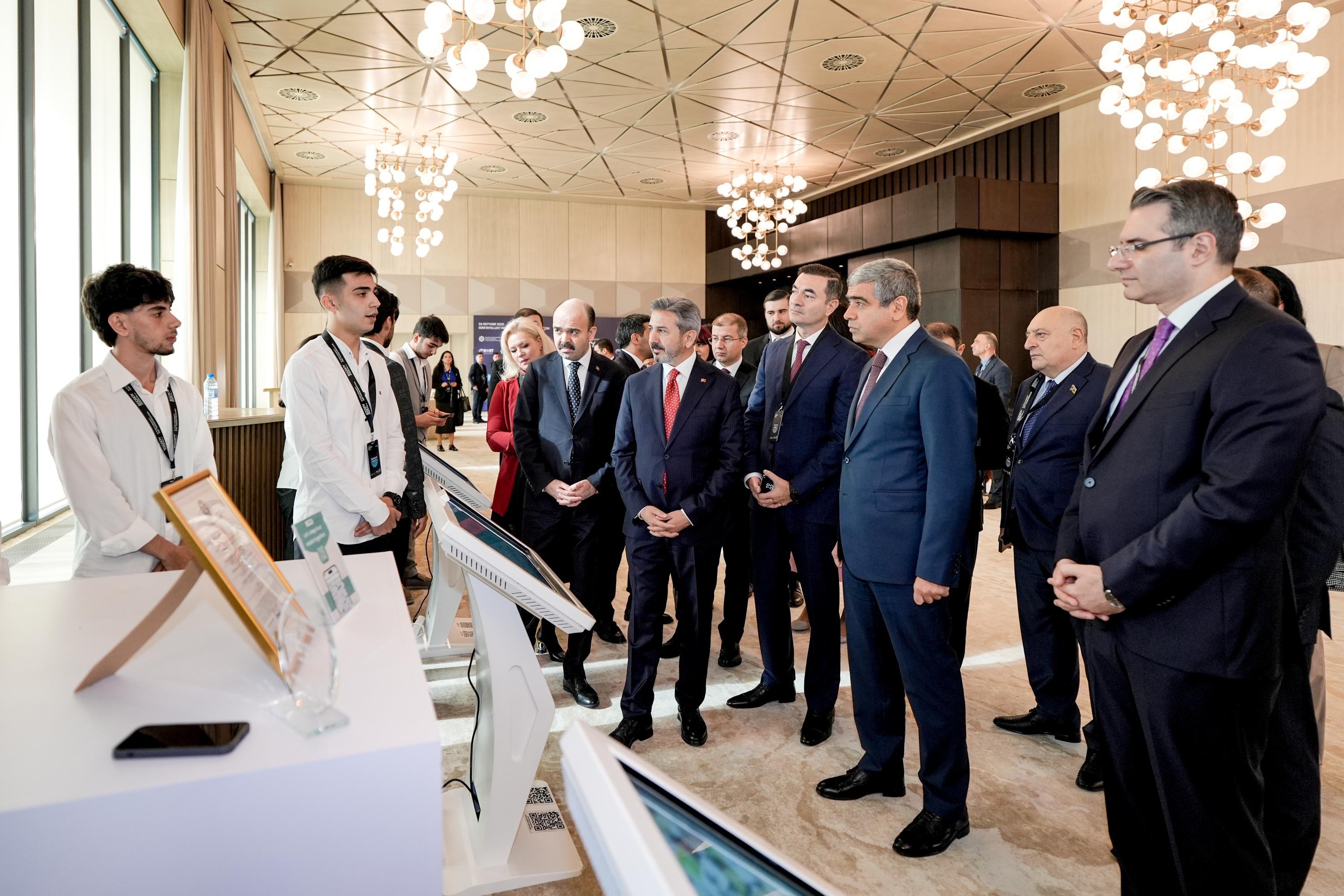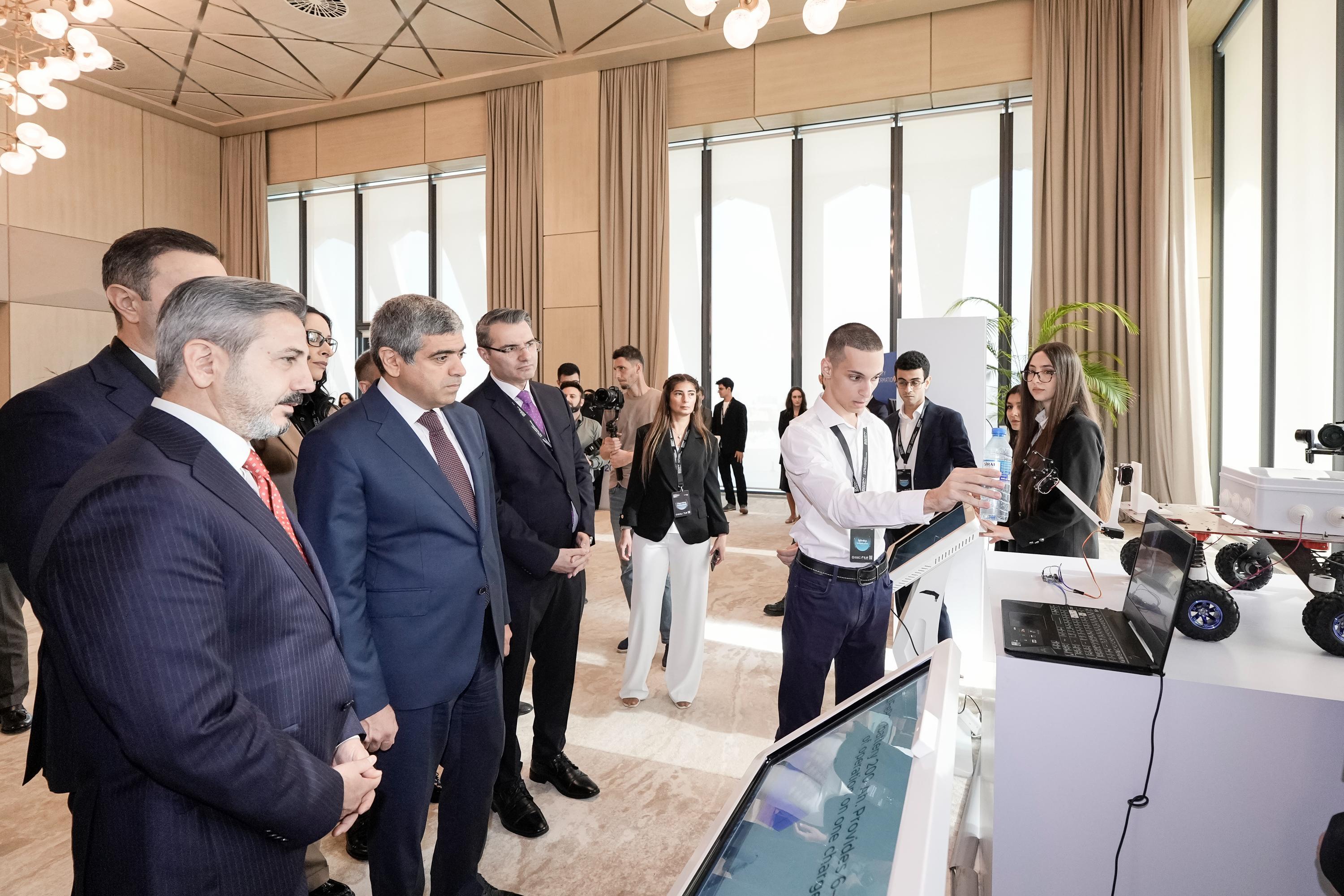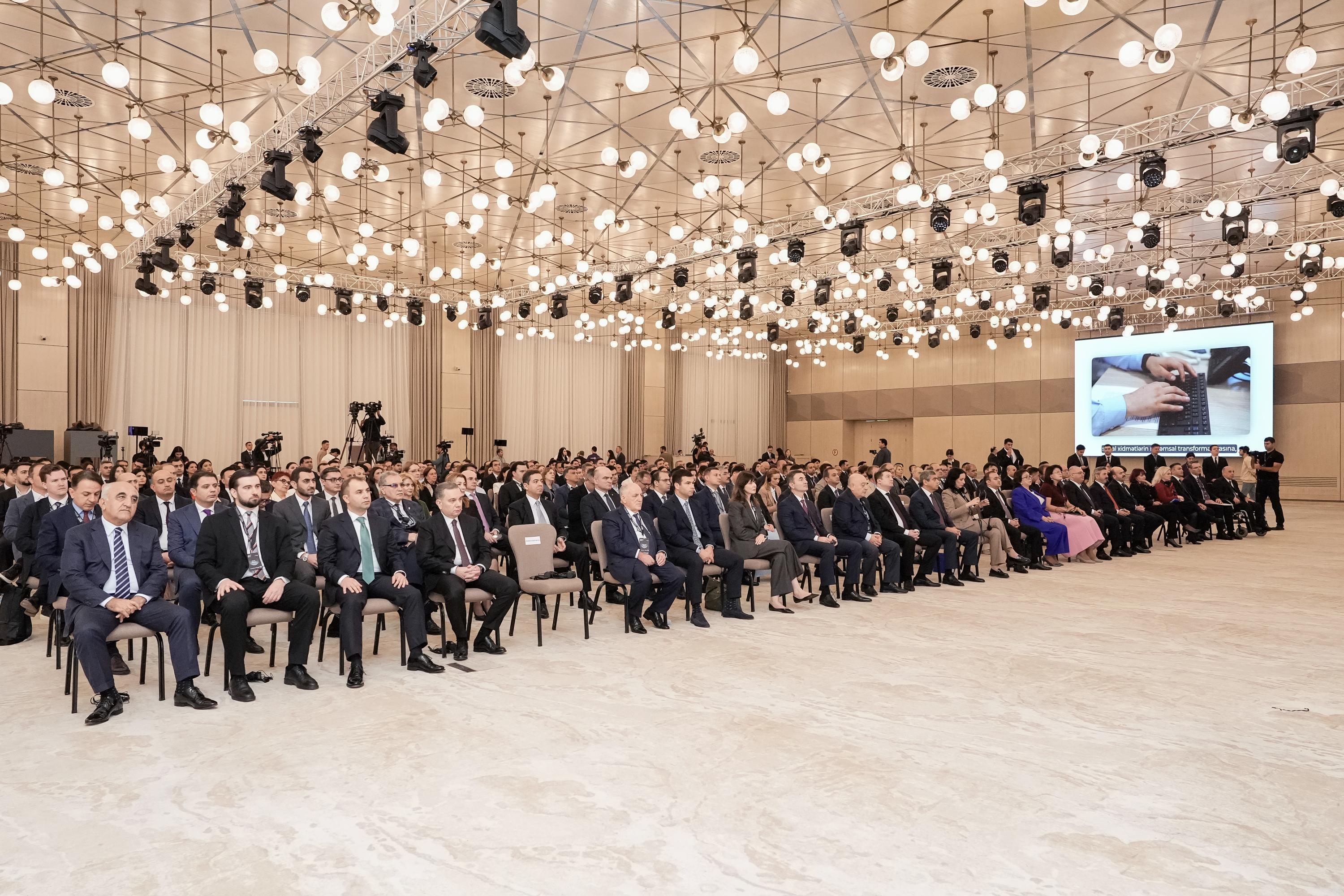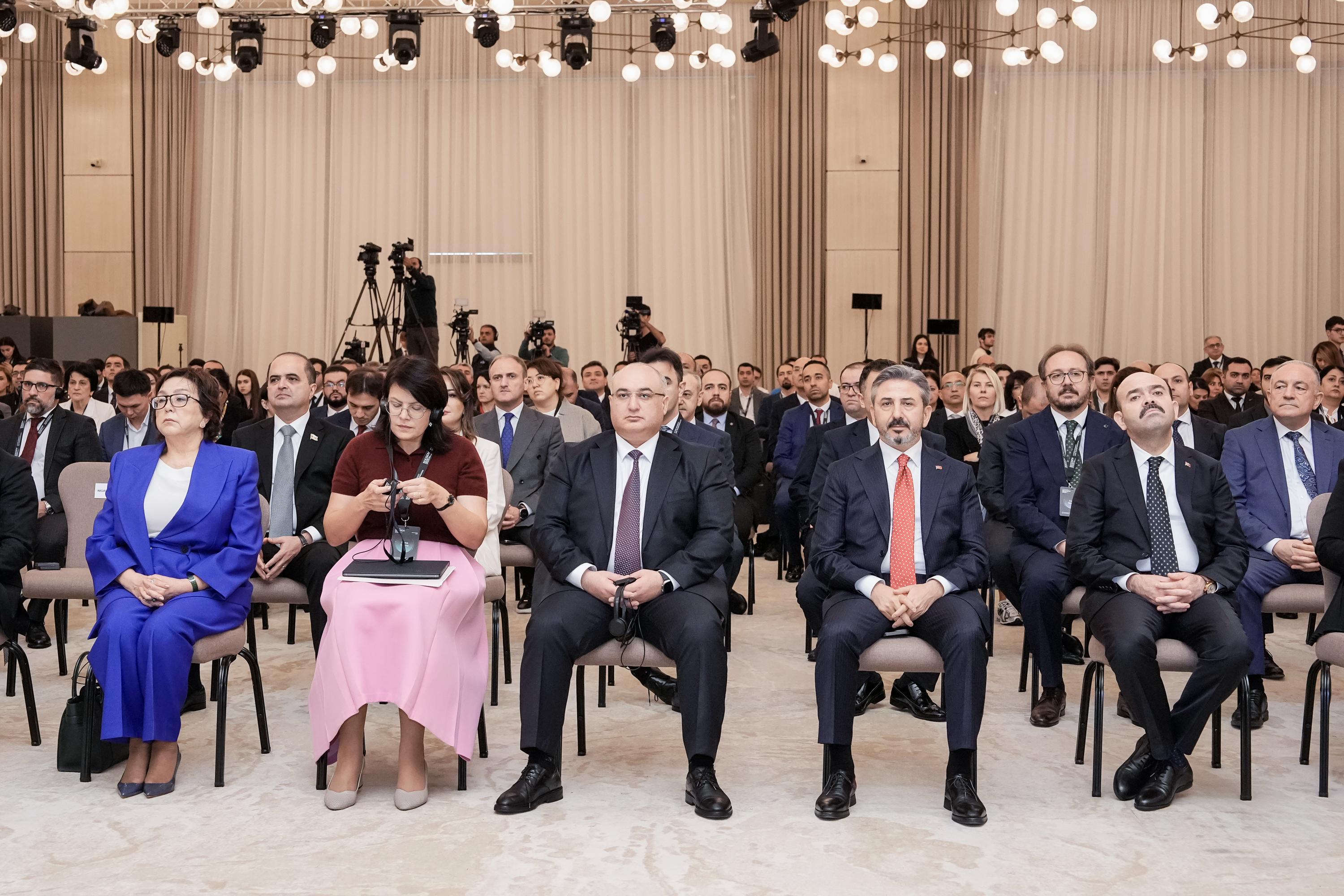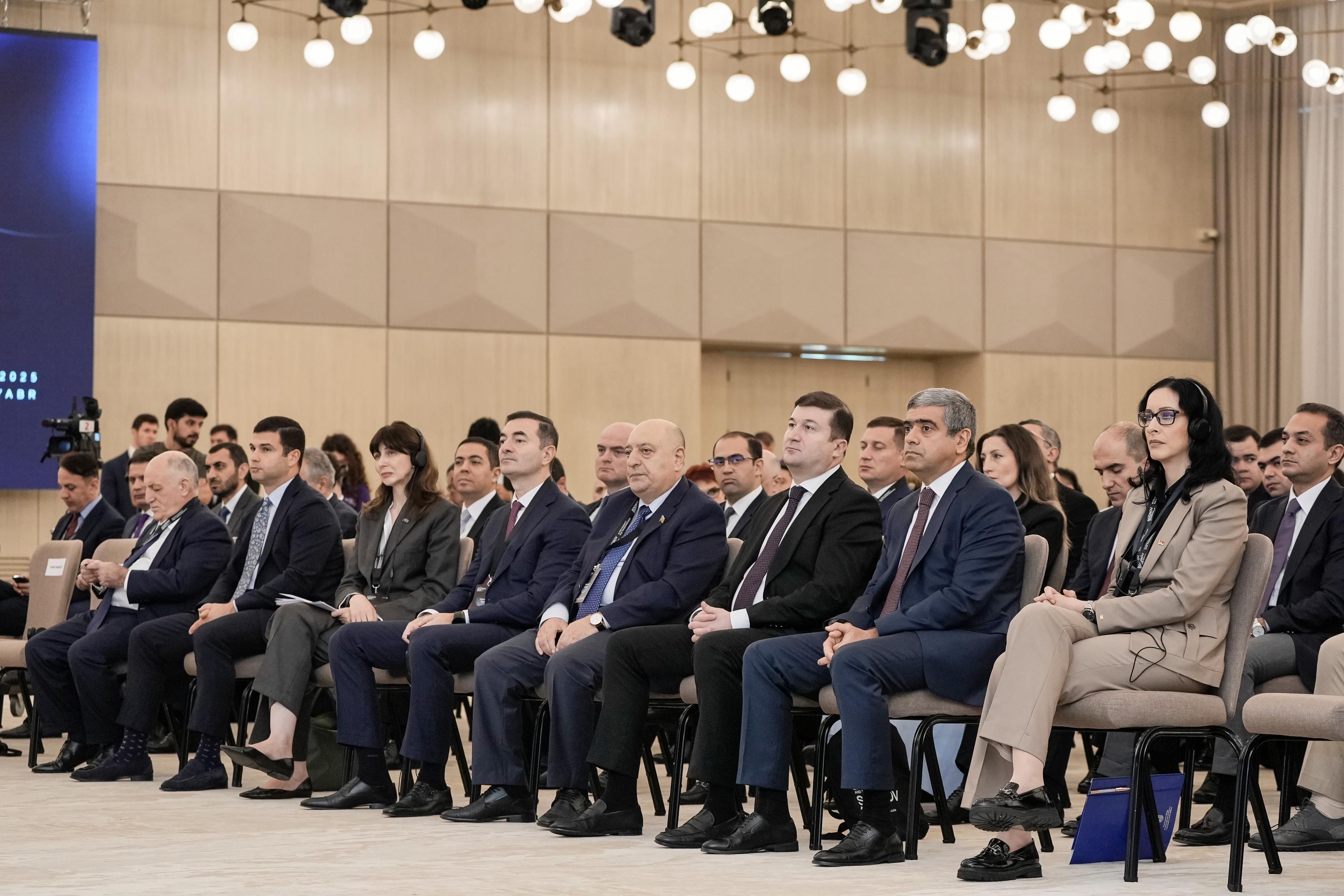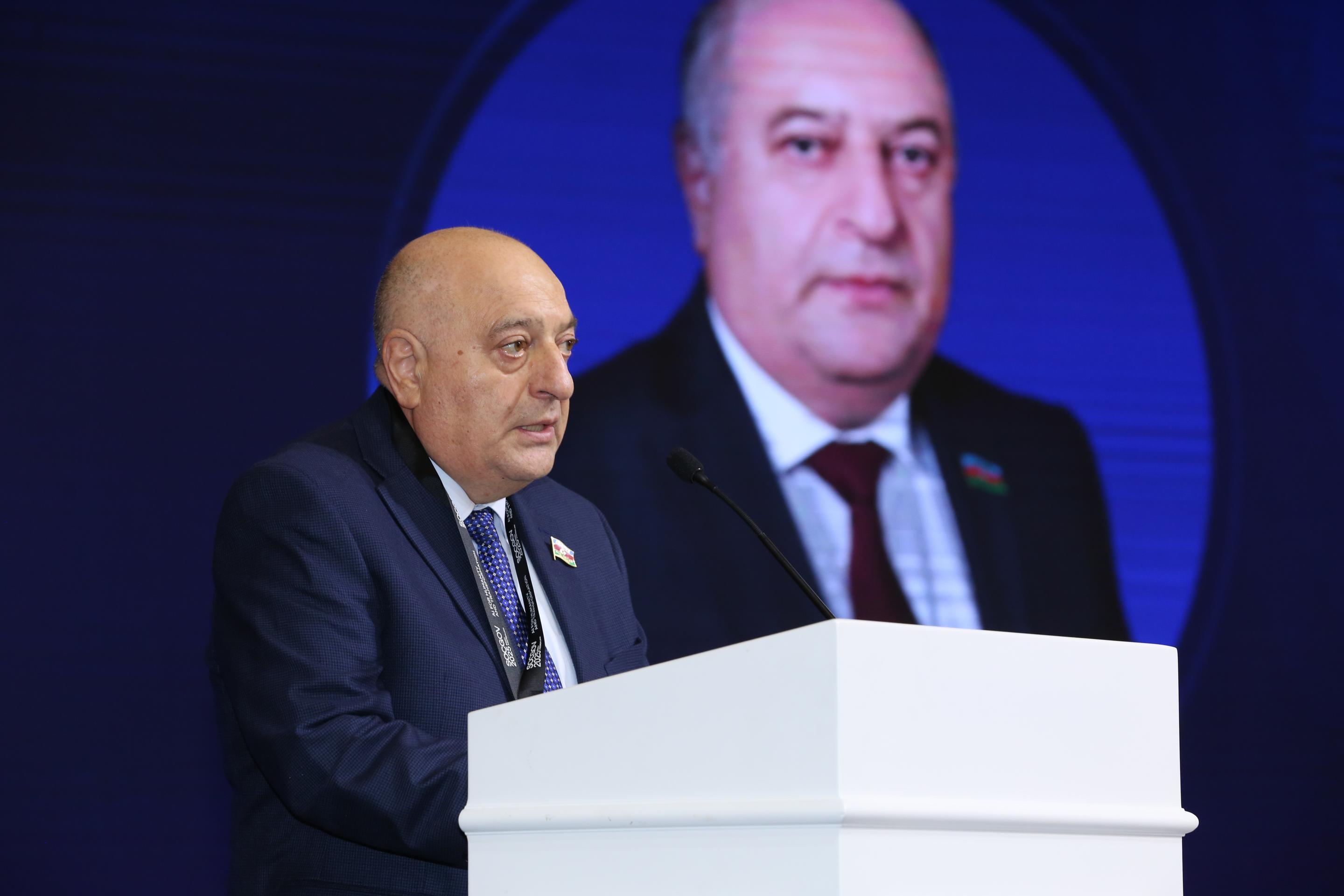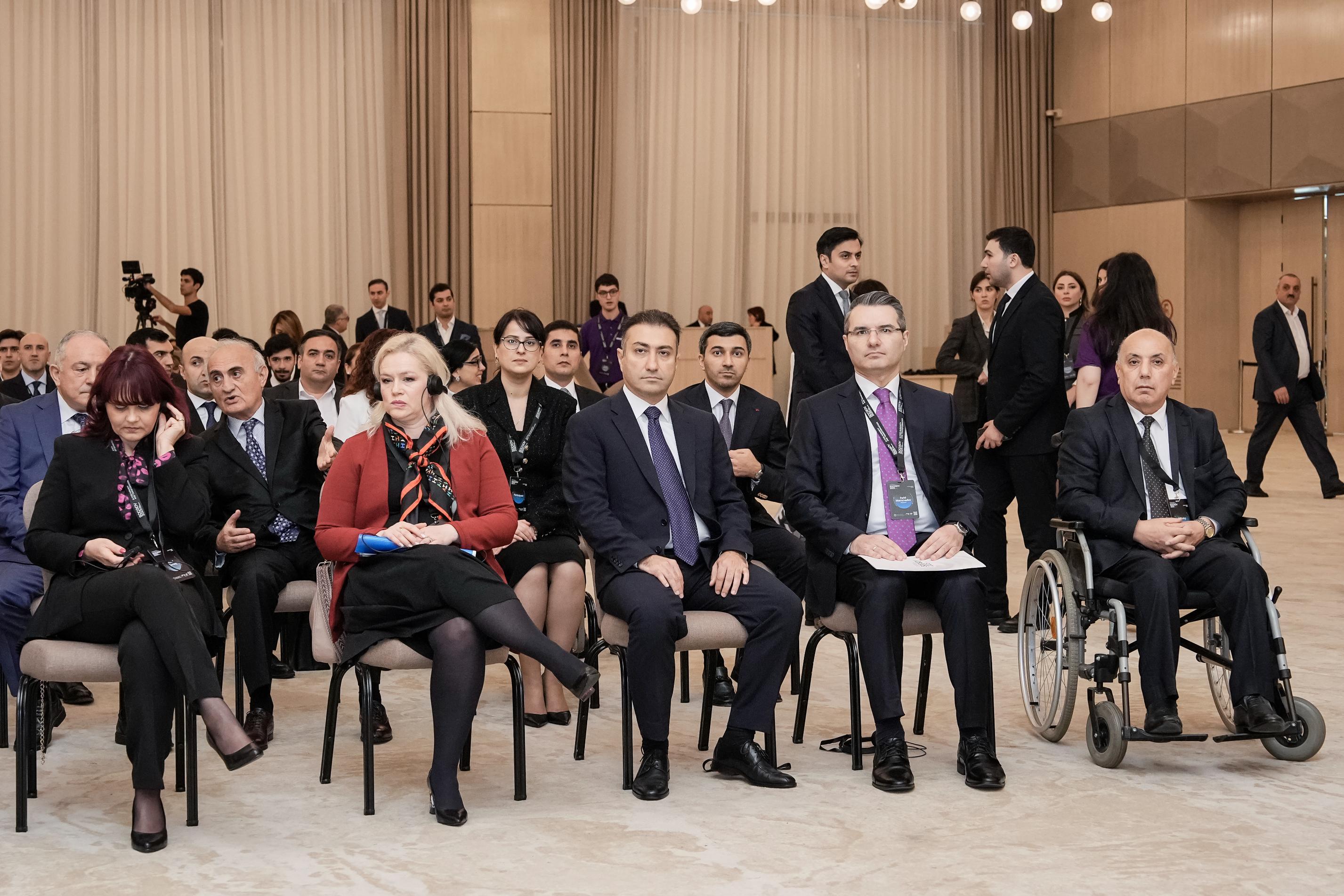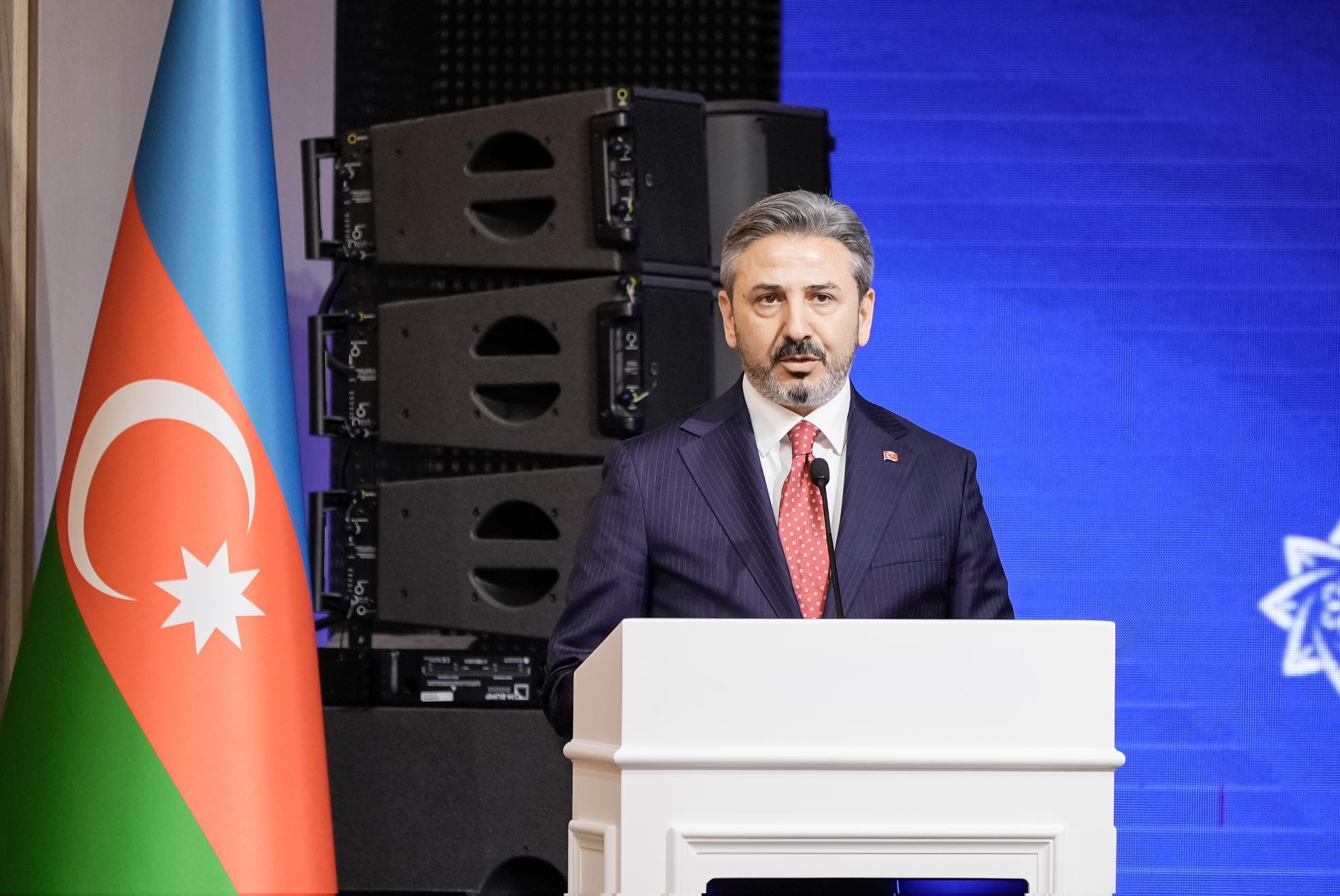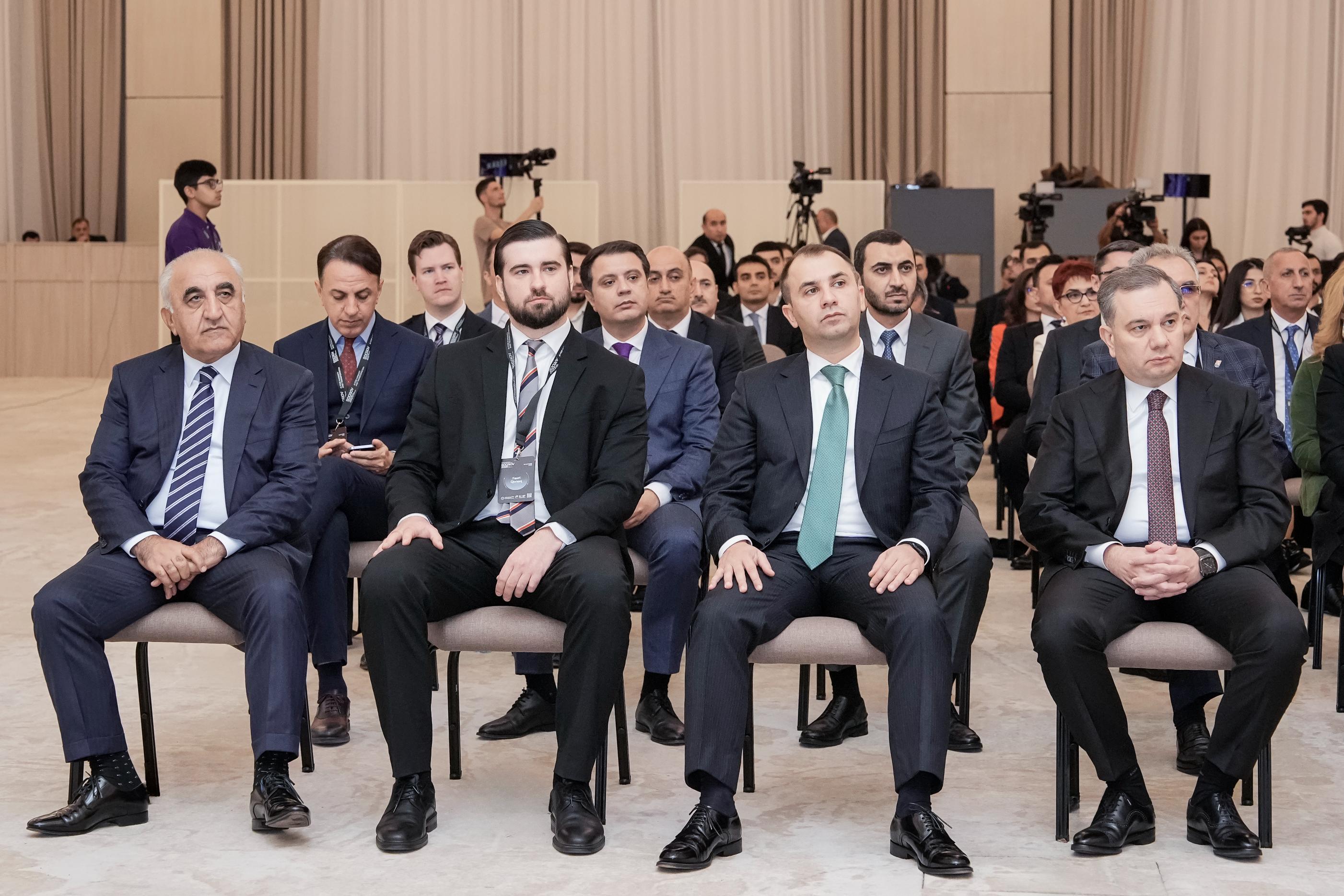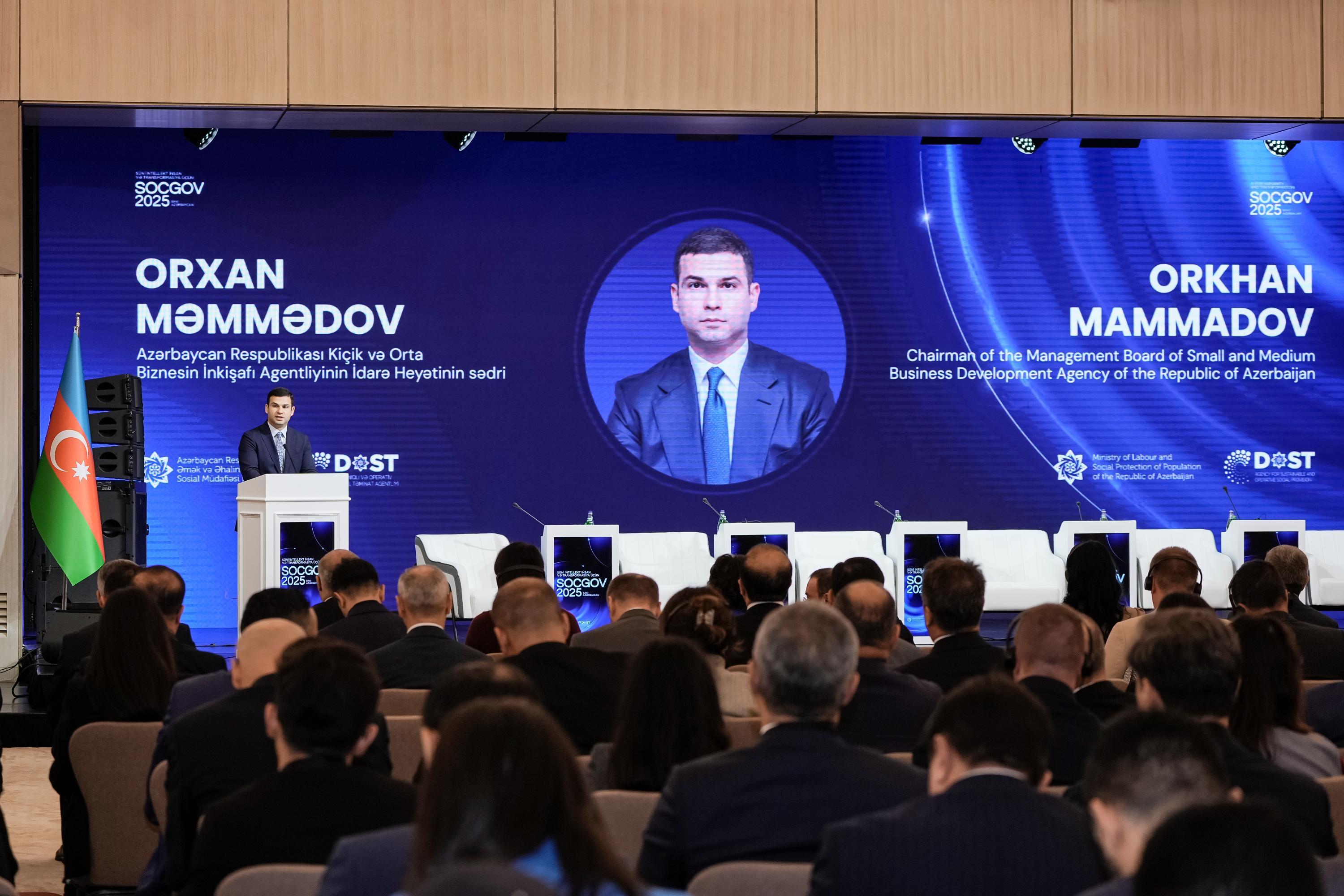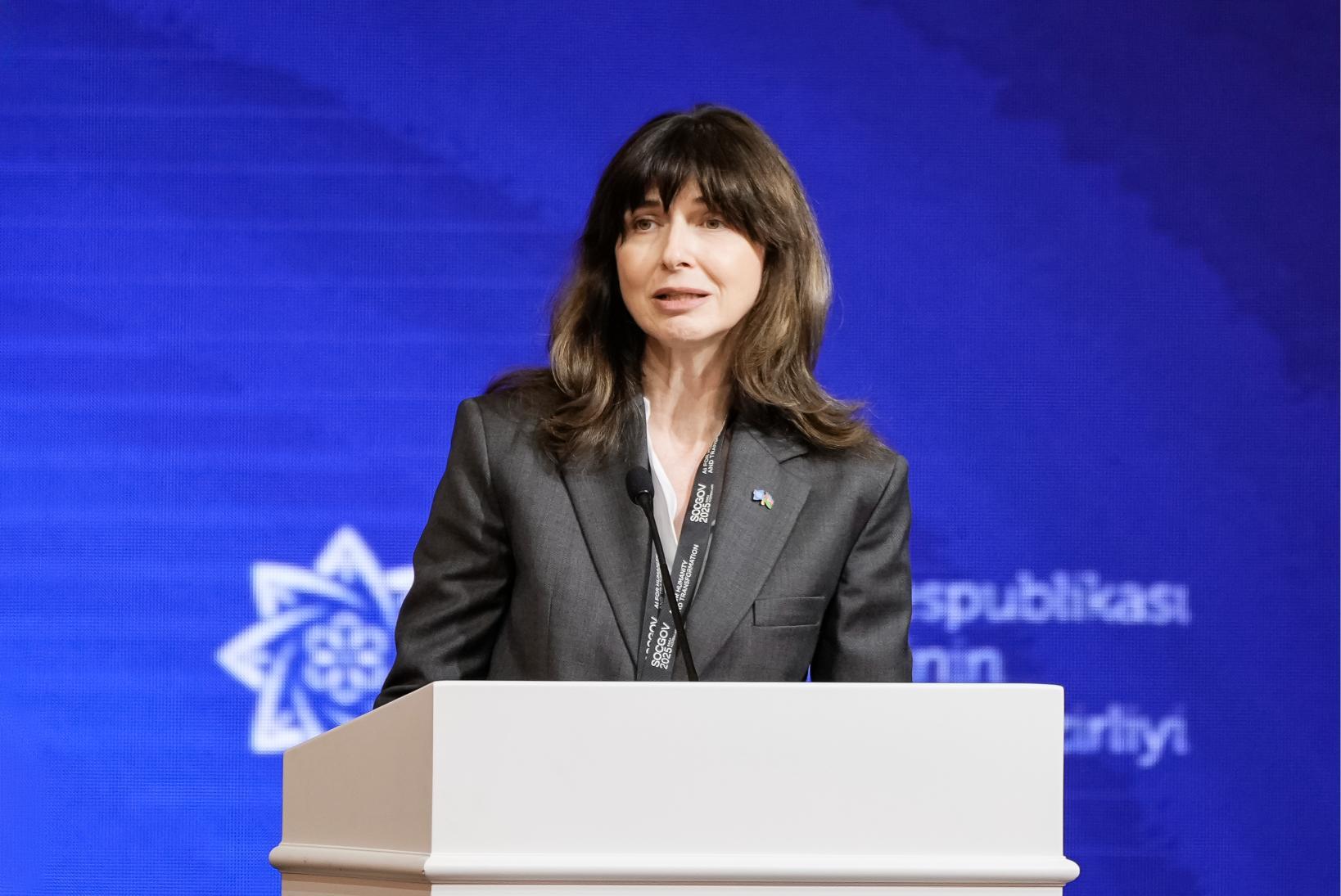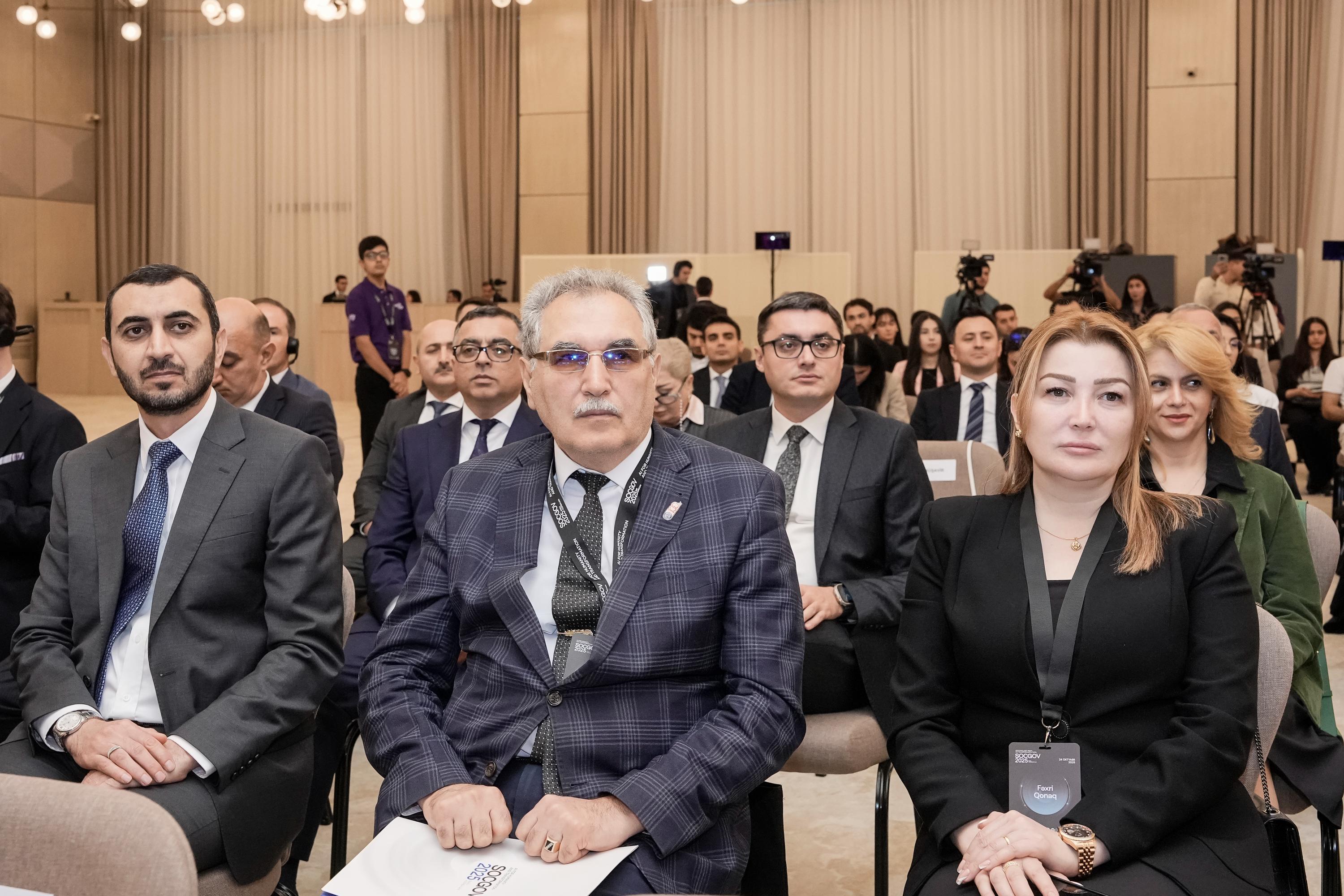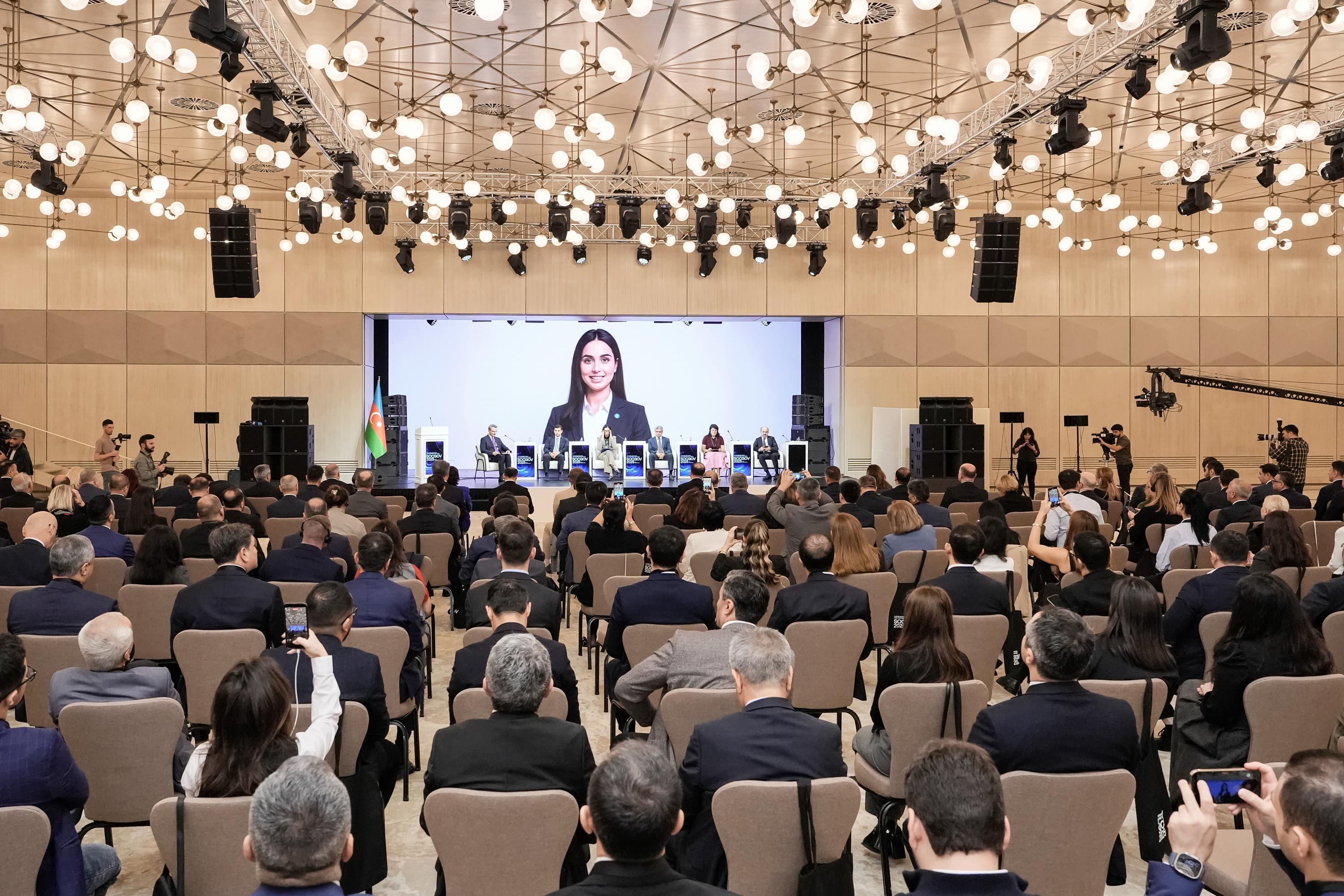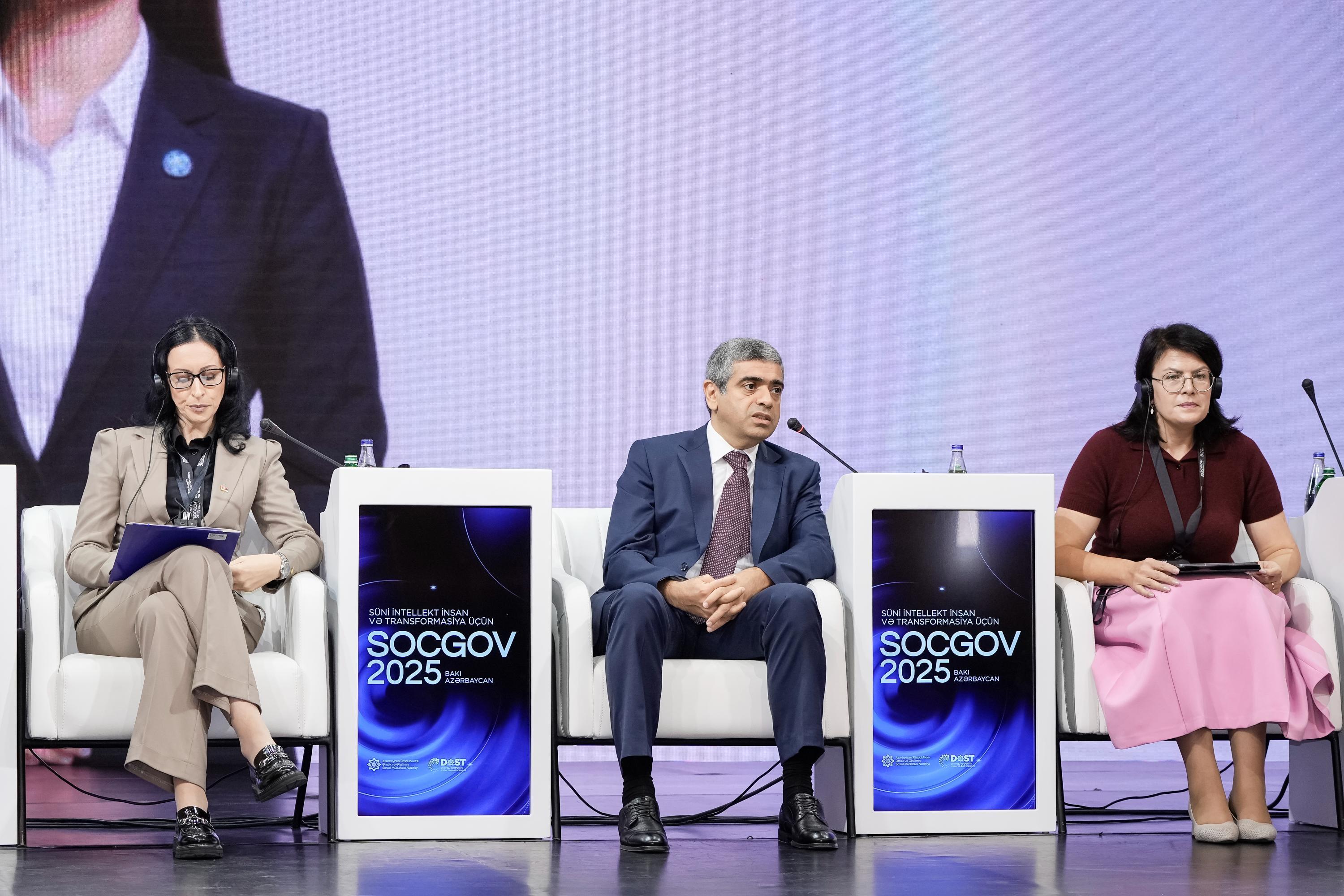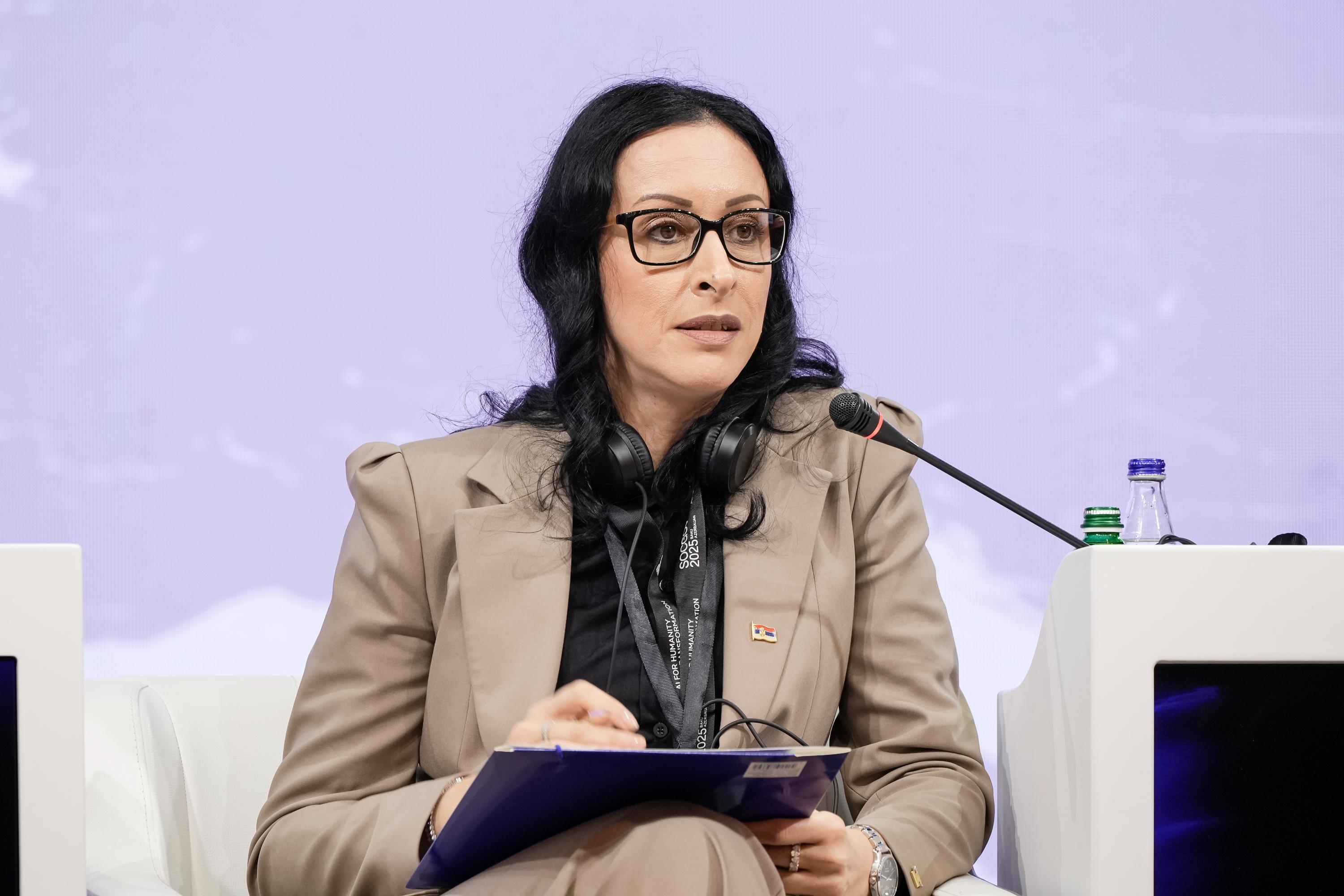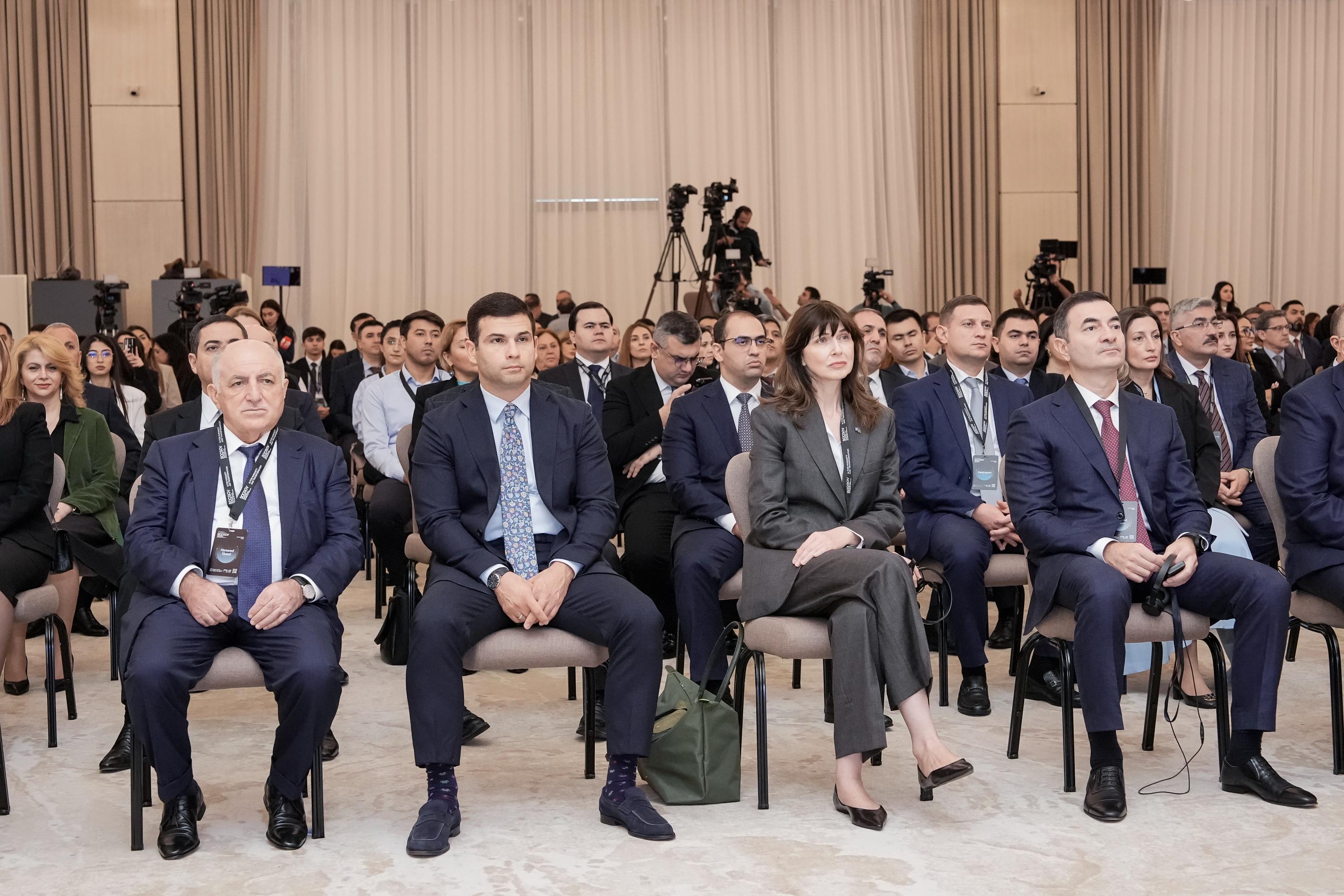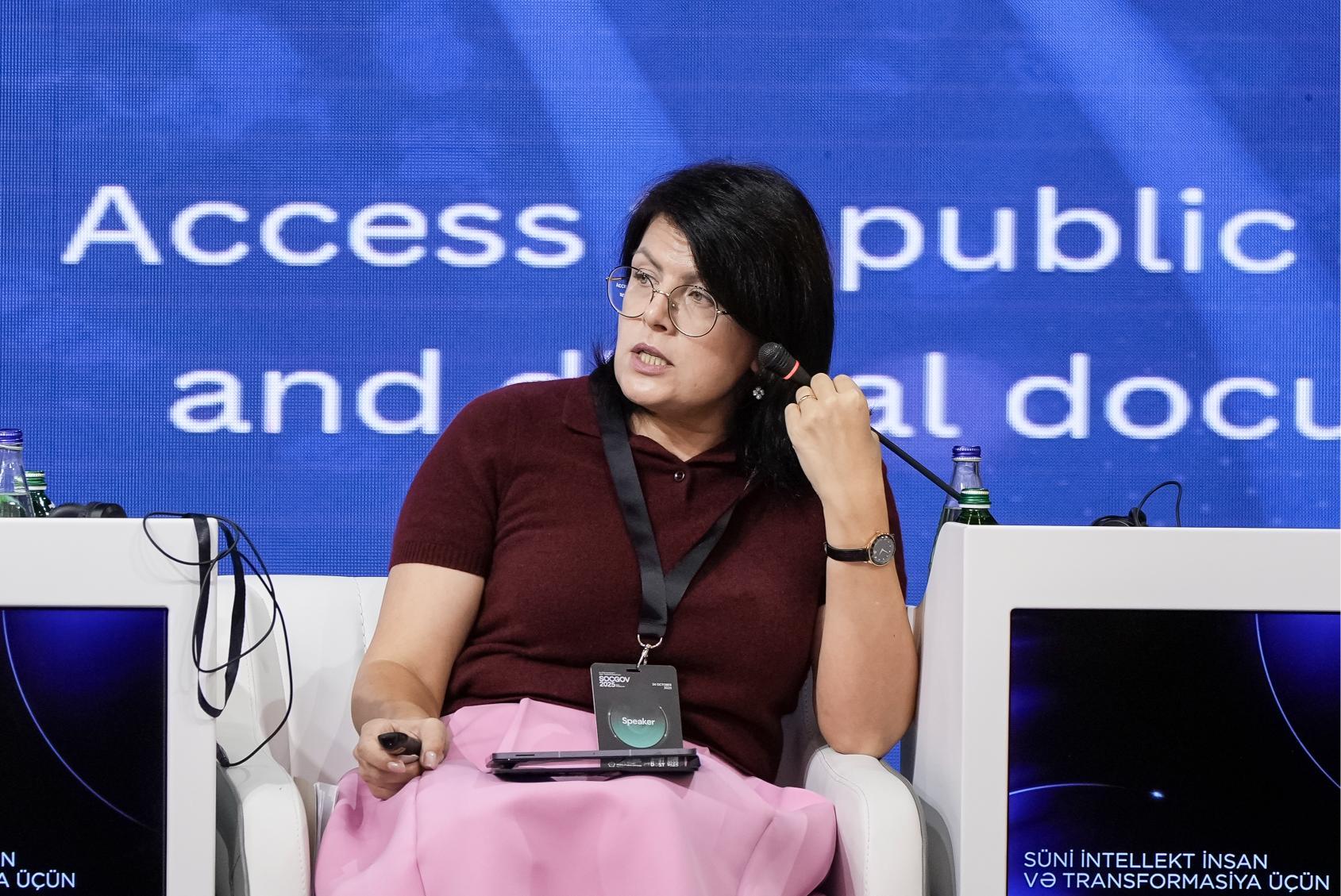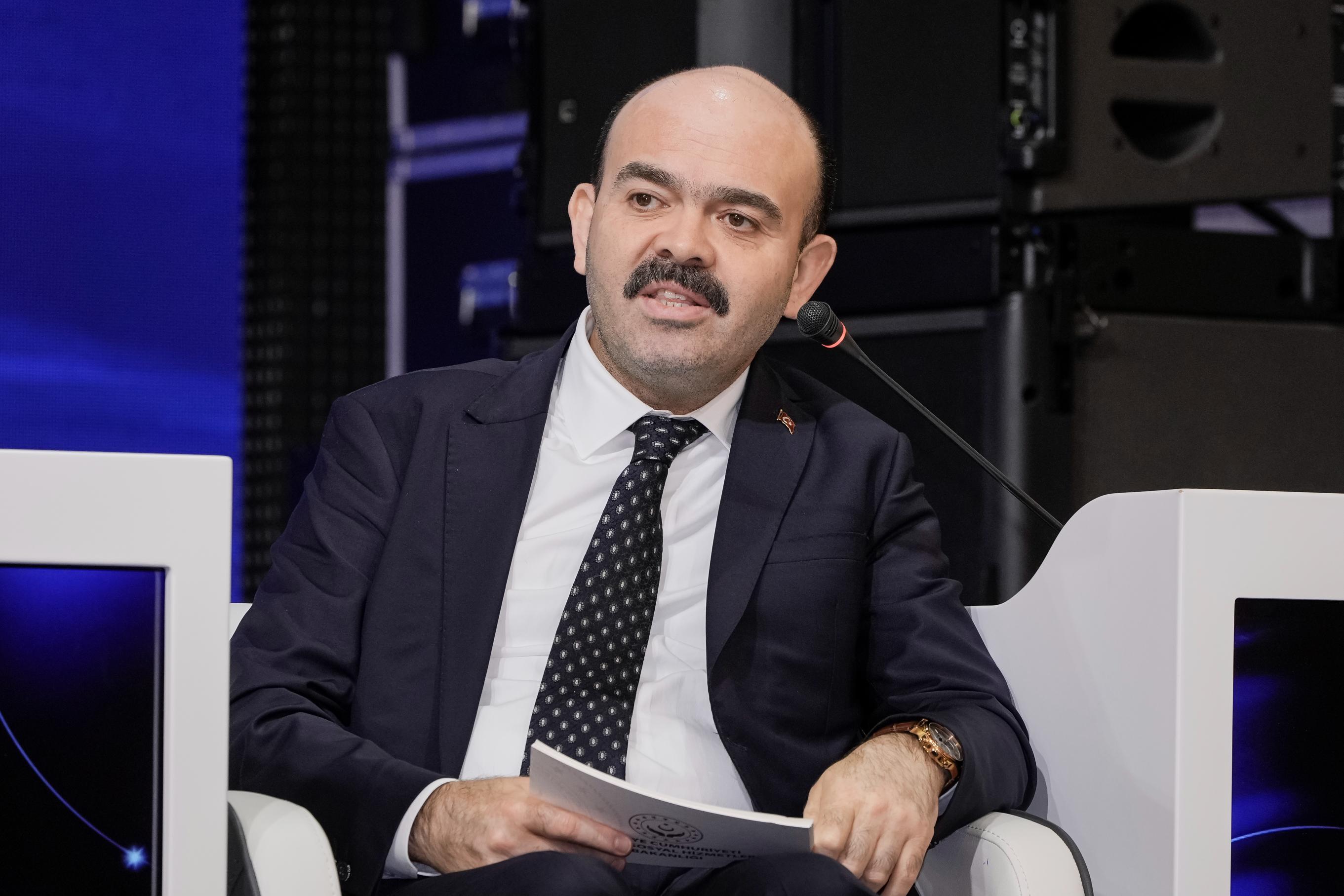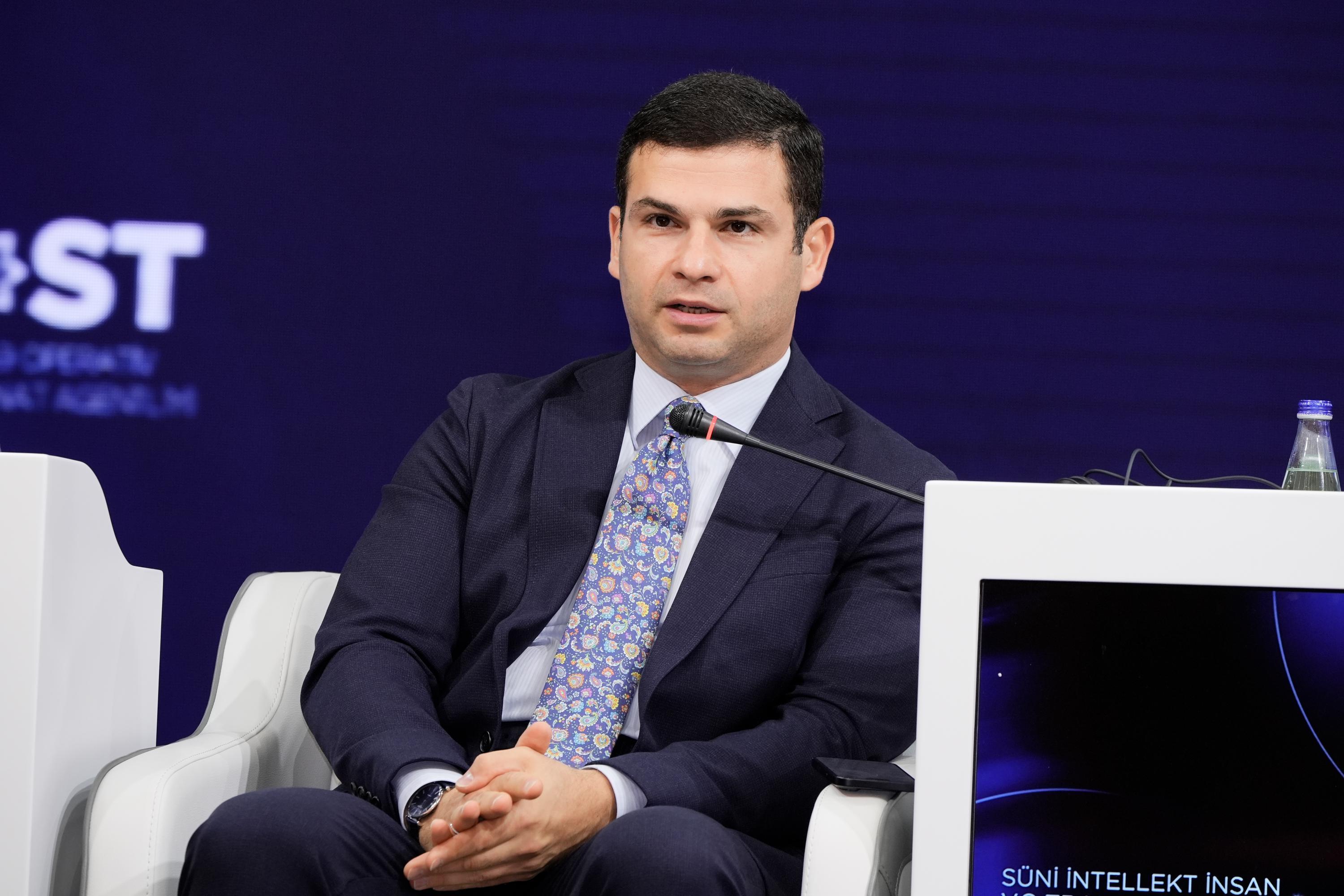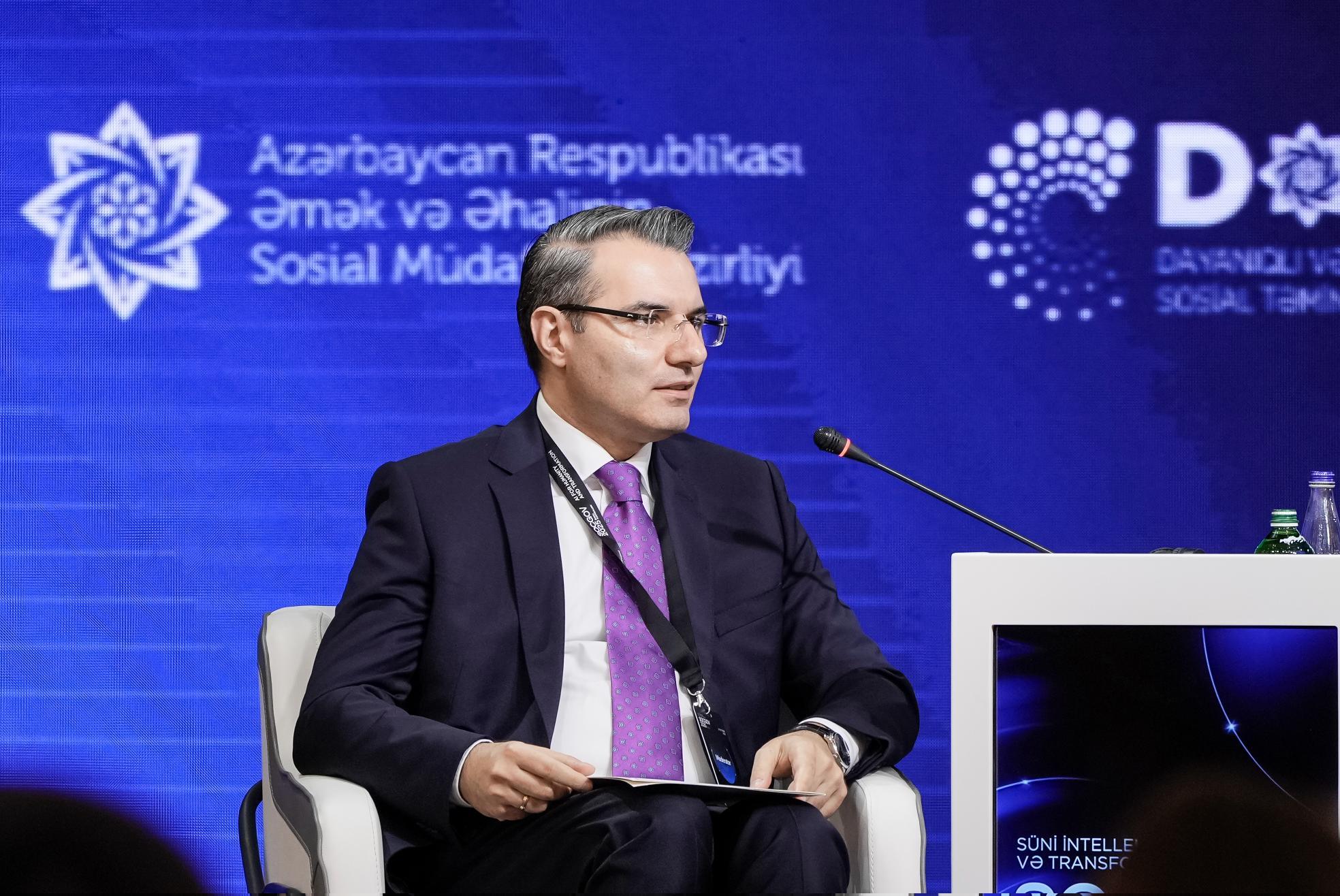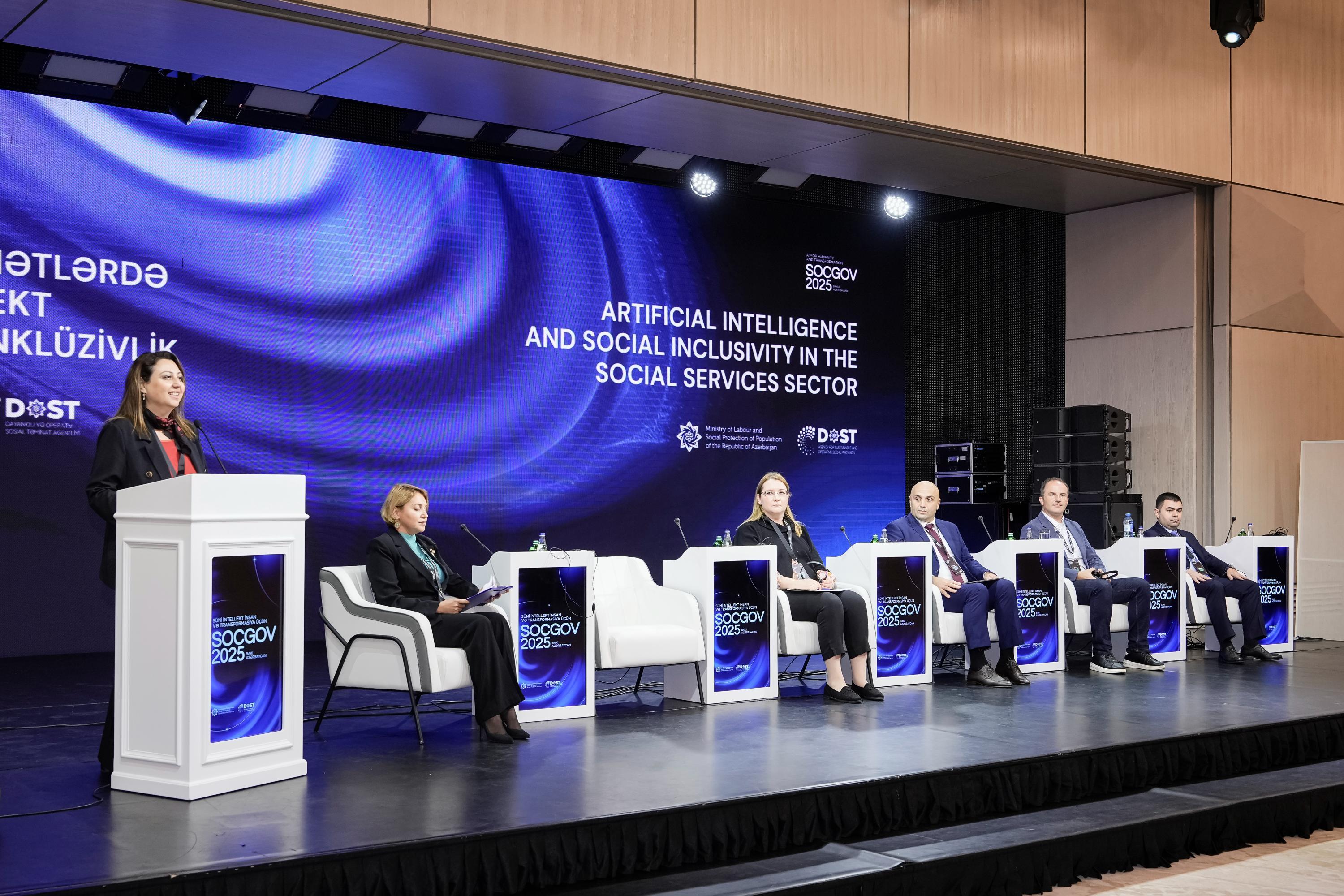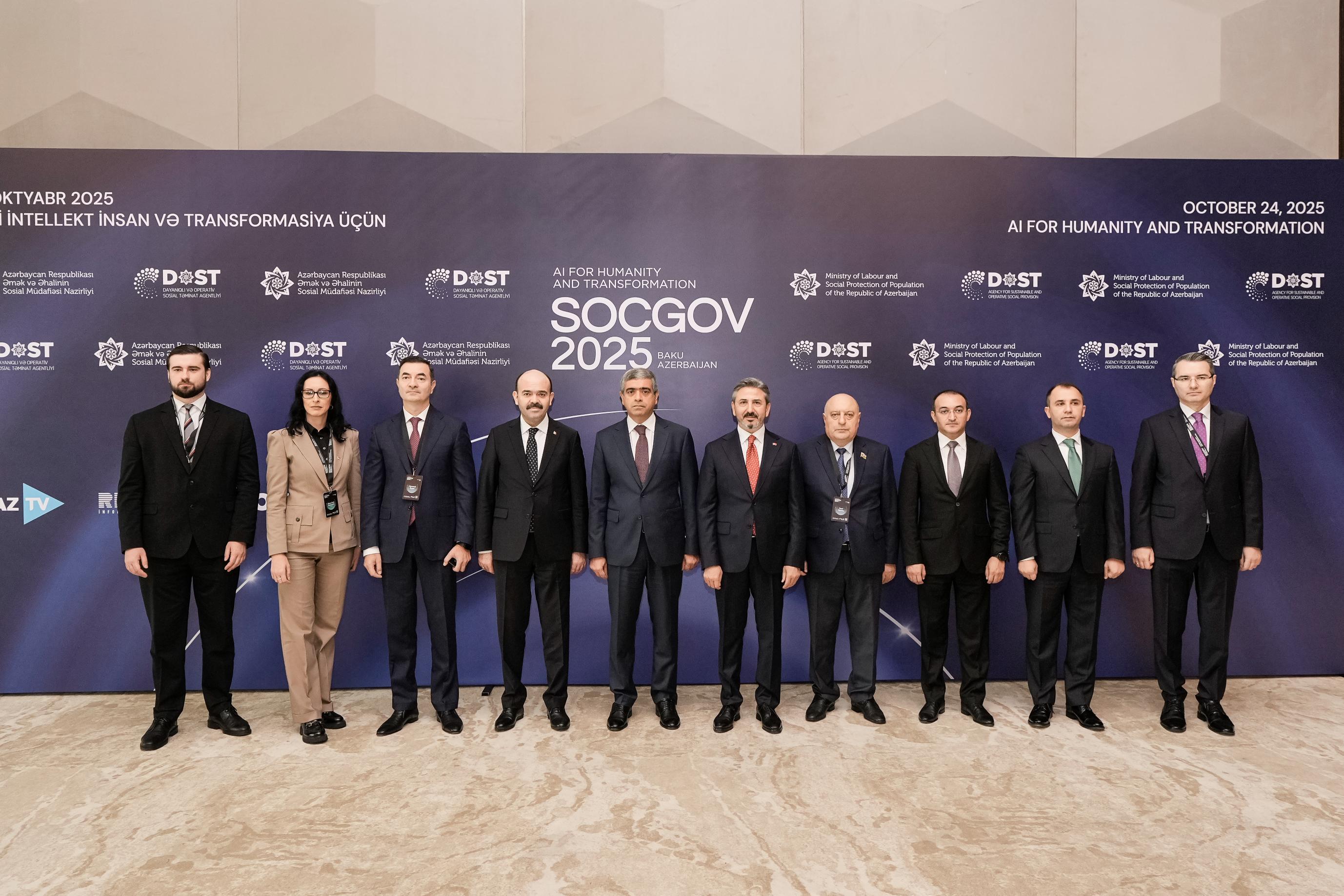





The event, initiated by the DOST Agency under the Ministry of Labour and Social Protection of Population, takes place at the “Gulustan” Palace. The conference brings together government officials, members of parliament, representatives of non-governmental and international organizations, local and foreign experts, and around 350 participants from nearly 20 countries. The event began with the screening of a video dedicated to the activities of the DOST Agency.
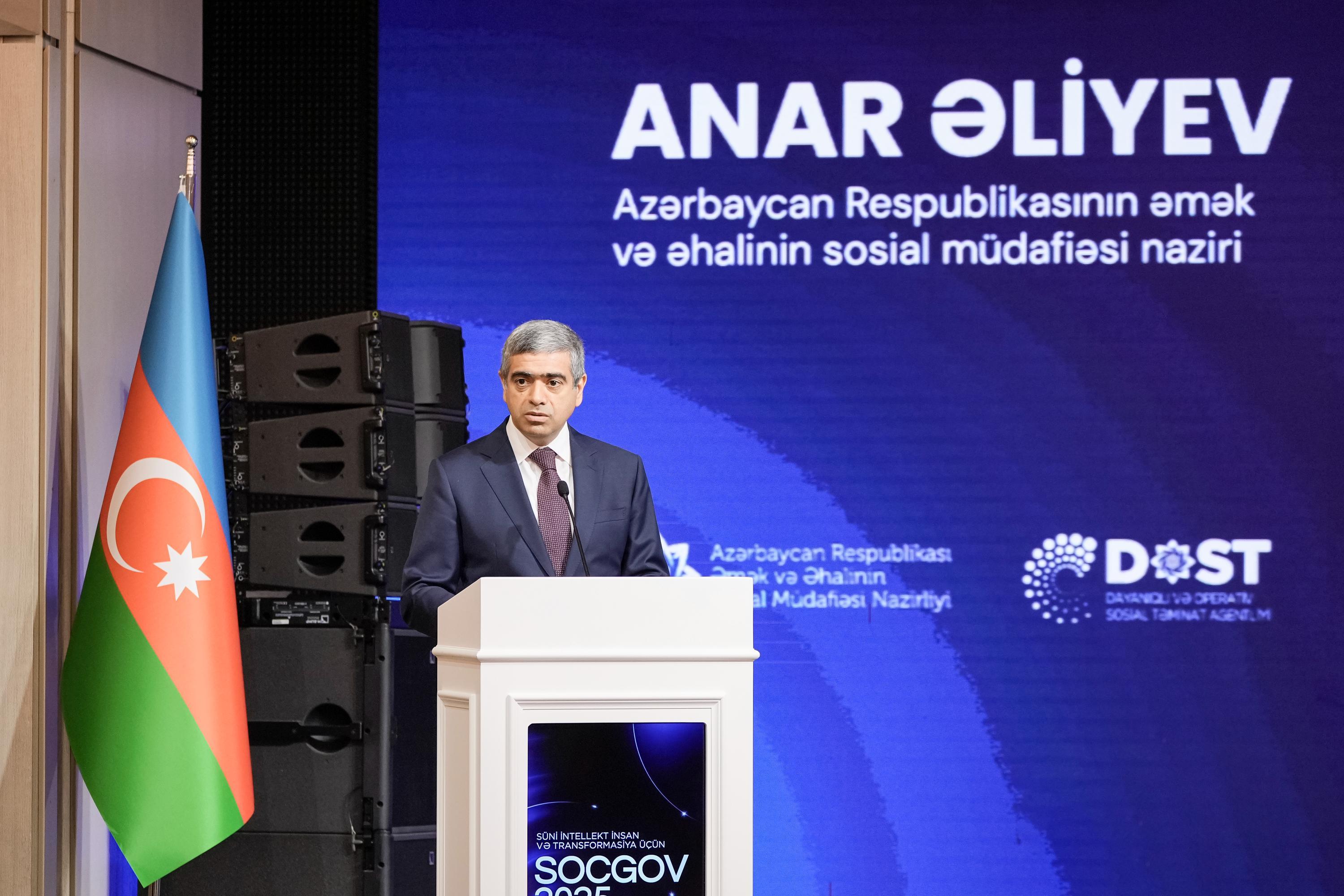
Minister of Labour and Social Protection of Population Anar Aliyev delivered the opening speech, noting that this conference also marks the first presentation of the DOST Agency’s new “SocGov” brand, symbolizing a new phase of innovation and mindset transformation in social governance.
The Minister emphasized that the social policy pursued by President Ilham Aliyev places people at its core. As a result, consistent and profound reforms have been implemented in the social sphere over recent years. He highlighted the achievements of five major social reform packages carried out between 2018 and 2025, as well as significant increases in social payments.
Anar Aliyev underlined the progress achieved in ensuring social justice and transparency, improving the efficiency of service delivery, and transitioning from administrative methods to a service-based model. He emphasized the significance of the DOST concept — an initiative of First Vice-President Mehriban Aliyeva — in this regard. The Minister also noted the international recognition of the DOST model, which has attracted interest in countries such as Moldova, Uzbekistan, and Serbia.
He mentioned the major steps taken towards the digitalization of public social services, including the integration of the Ministry’s centralized electronic information system — consisting of 18 subsystems and 4 registries — with the databases of up to 80 institutions. Over 90 percent of the Ministry’s 150 services are now delivered via digital platforms, with 52 of them offered proactively.
The Minister added that, for three consecutive years, the Ministry has ranked first among government bodies according to the “ASAN Service Index.” In recent years, it has received nearly 250 international recognitions and awards. These achievements demonstrate that Azerbaijan’s social governance model is acknowledged globally as a reliable, innovative, and people-centred example.
Anar Aliyev stated that activities are being carried out in line with the Ministry’s three-year Roadmap developed within the framework of its Artificial Intelligence Strategy. He noted that AI-based functionalities have already been introduced in the “Disability” subsystem to analyse medical referrals, and that an AI-powered advisory mechanism is being developed to further enhance decision-making speed, objectivity, and transparency. AI solutions are also planned to be implemented in the fields of employment and rehabilitation, forming part of the Ministry’s strategic priorities.
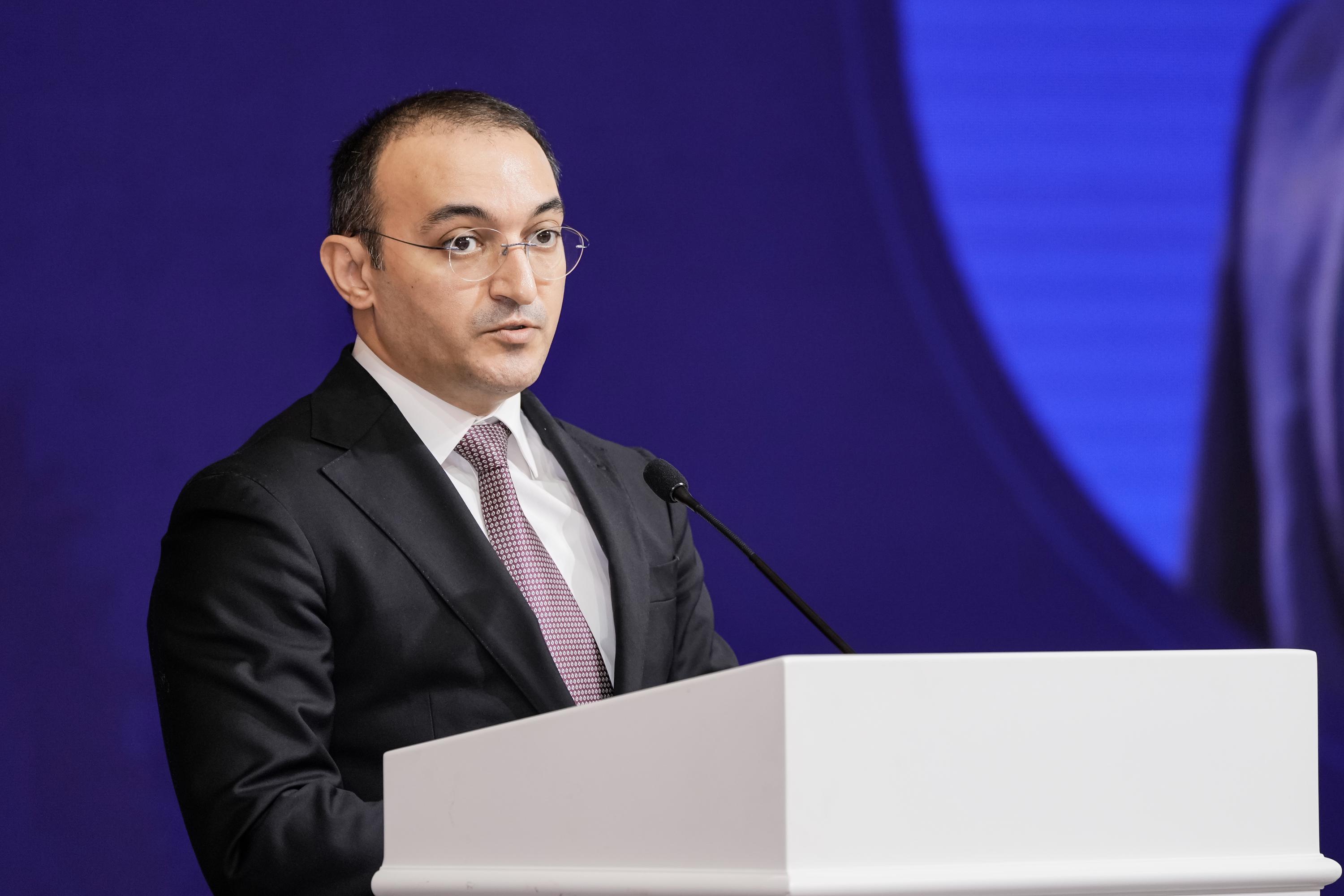
Speakers at the conference included Chairman of the State Agency for Public Service and Social Innovations under the President of the Republic of Azerbaijan Ulvi Mehdiyev, Chairman of the Small and Medium Business Development Agency Orkhan Mammadov, Chairman of the Milli Majlis Committee on Labour and Social Policy Musa Guliyev, Deputy Minister of Labour and Social Protection of Türkiye Ahmet Aydin, and UN Resident Coordinator in Azerbaijan Vladanka Andreeva. They emphasized the importance of organizing such a conference focused on the impact of artificial intelligence on social life and key topics in social transformation.
The event continues with panel discussions on “Digital Government and Transformation through Artificial Intelligence,” “Artificial Intelligence and Social Inclusion in Social Services,” and “The Future of the Labour Market, Skills Development, and Digital Entrepreneurship.” During the discussions, local and international experts share their institutional experiences and present ideas and proposals related to the implementation of innovative approaches and modern technologies in the field of social services. It is also planned to present certificates of appreciation and symbolic gifts to international participants.