




A strong and healthy family institution, the protection of women’s rights and their active participation in public life, as well as ensuring that children grow up in a safe and healthy environment, are key conditions for sustainable and inclusive development.
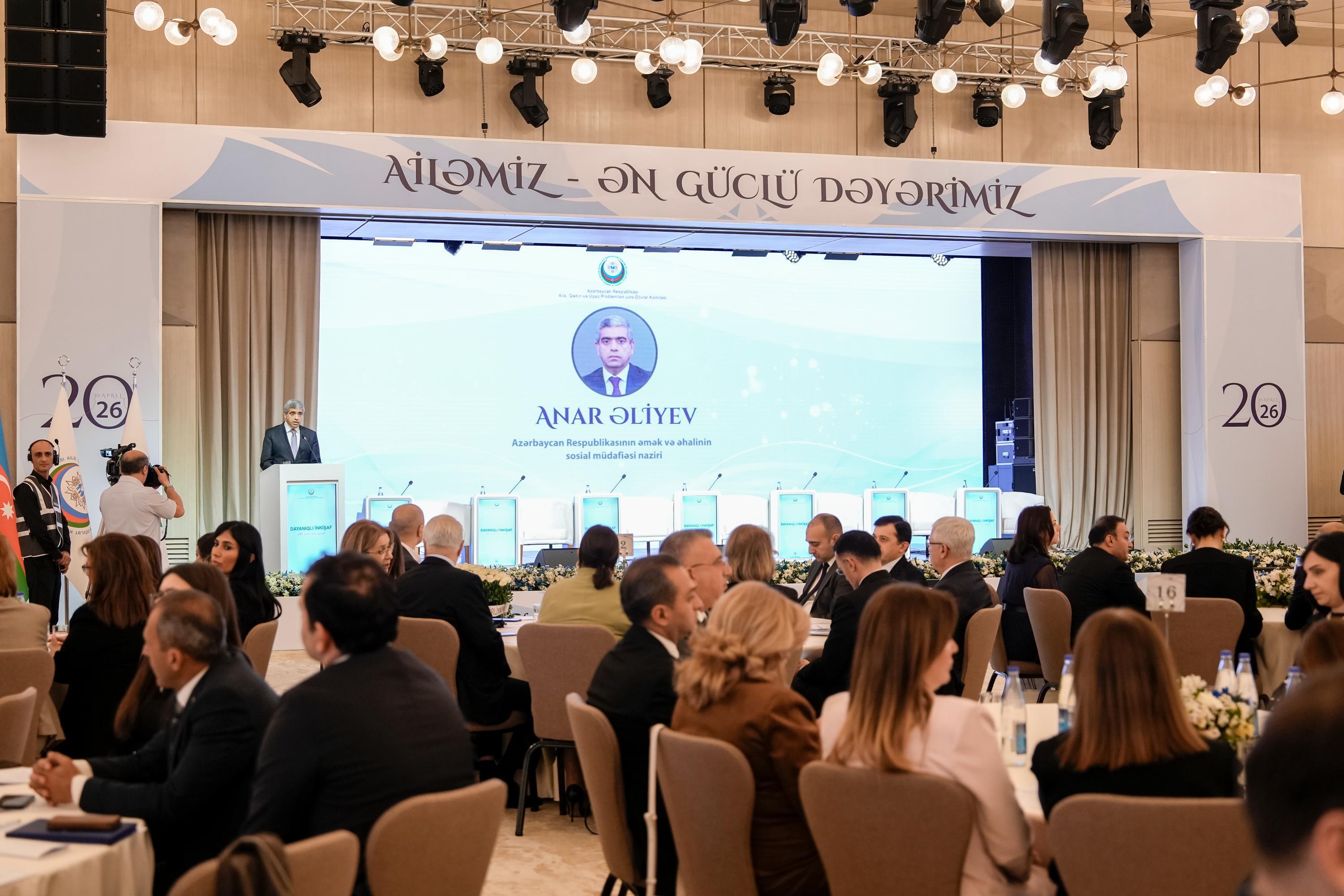
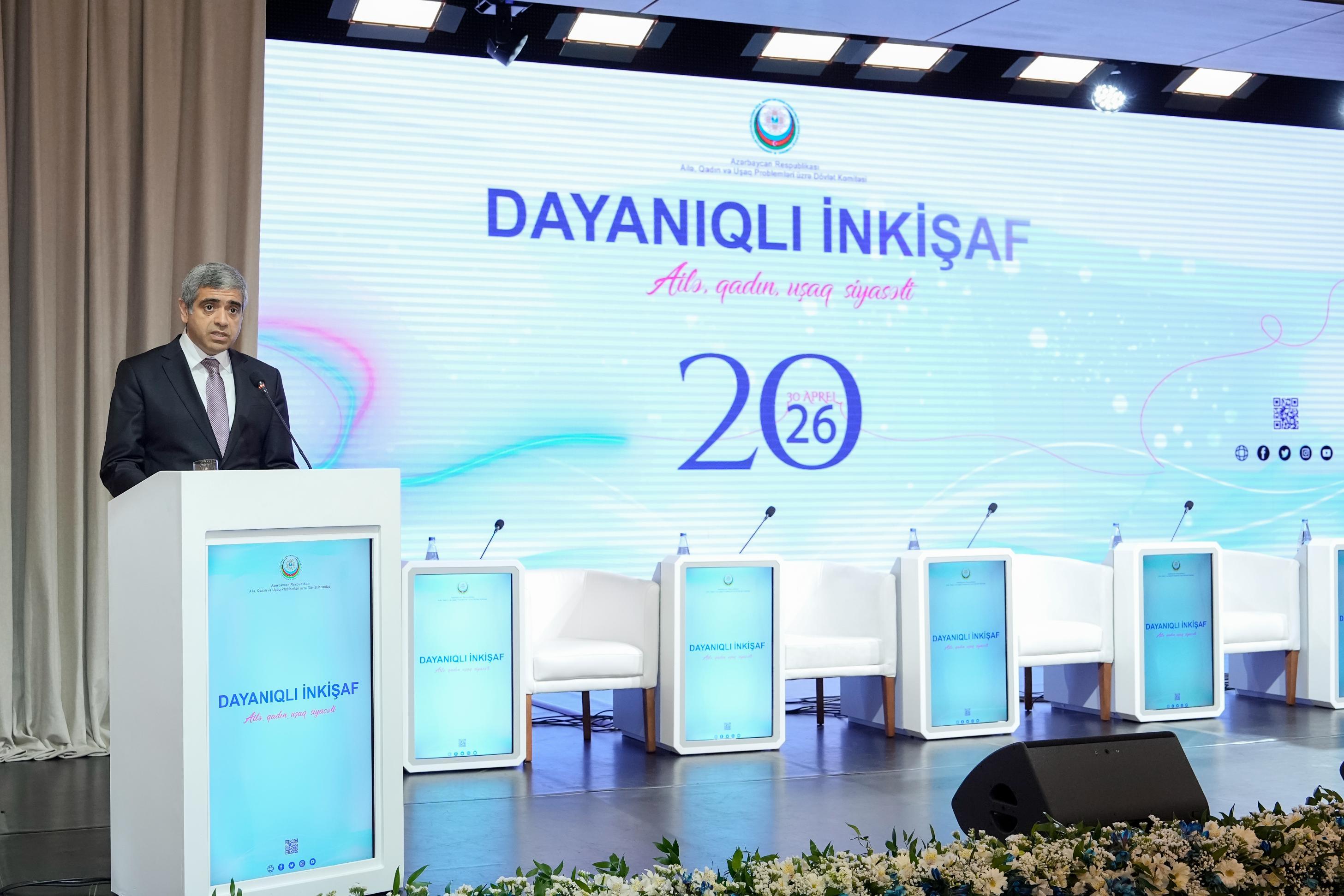
This was stated by the Minister of Labour and Social Protection of the Population, Anar Aliyev, at an event titled “Sustainable Development: Family, Women and Child Policy.” He emphasised that, as a result of the consistent and targeted policy implemented under the leadership of President Ilham Aliyev, five social reform packages covering 4 million people have been implemented since 2018. These reforms have served to strengthen the social protection of low-income families, women, and children.
Referring to the social protection of children deprived of parental care, Anar Aliyev noted that 1250 children currently live under permanent state care in social service institutions under the Ministry. In these institutions, children are provided with stationary and semi-stationary social, medical-social, socio-cultural, and socio-pedagogical services.
The Minister stated that, upon the instruction of First Vice-President Mehriban Aliyeva, important reforms have been implemented in the areas of adoption, foster care, and reintegration of children into families. Since 2019, when the implementation and regulation of state policy in the field of adoption was assigned to the Ministry, 865 children have been adopted. Since 2022, the foster family model—one of the key directions of family and child policy—has been successfully implemented in the country, and a total of 78 children (34 boys and 44 girls) have been placed in foster families. Foster families are provided with a monthly allowance of 650 manats and an annual payment of 800 manats per child.
Anar Aliyev highlighted that reintegration measures are one of the key mechanisms aimed at ensuring that children separated from their families for various reasons grow up in a family environment. Through these measures, 873 children have been returned to their families from social service institutions since 2020.
He also noted that recent amendments to legislation have removed a number of restrictions previously applied to women in the labour market. At the same time, women’s participation in active labour market programmes continues to increase each year. Of the 113 thousand individuals involved in the self-employment programme, 31 percent, or 35 thousand, are women. Since 2018, more than 59 thousand people have been involved in vocational training programmes, of whom 61 percent, or 36 thousand, are women.